If you’re a real estate agent still trying to rank for “homes for sale in [city name],” you’re fighting a losing battle against Zillow, Realtor.com, and Redfin. Those portals have billions of dollars and decades of domain authority behind them. You will never outrank them on broad city-level keywords.
But here’s what they can’t do: dominate at the neighborhood level.
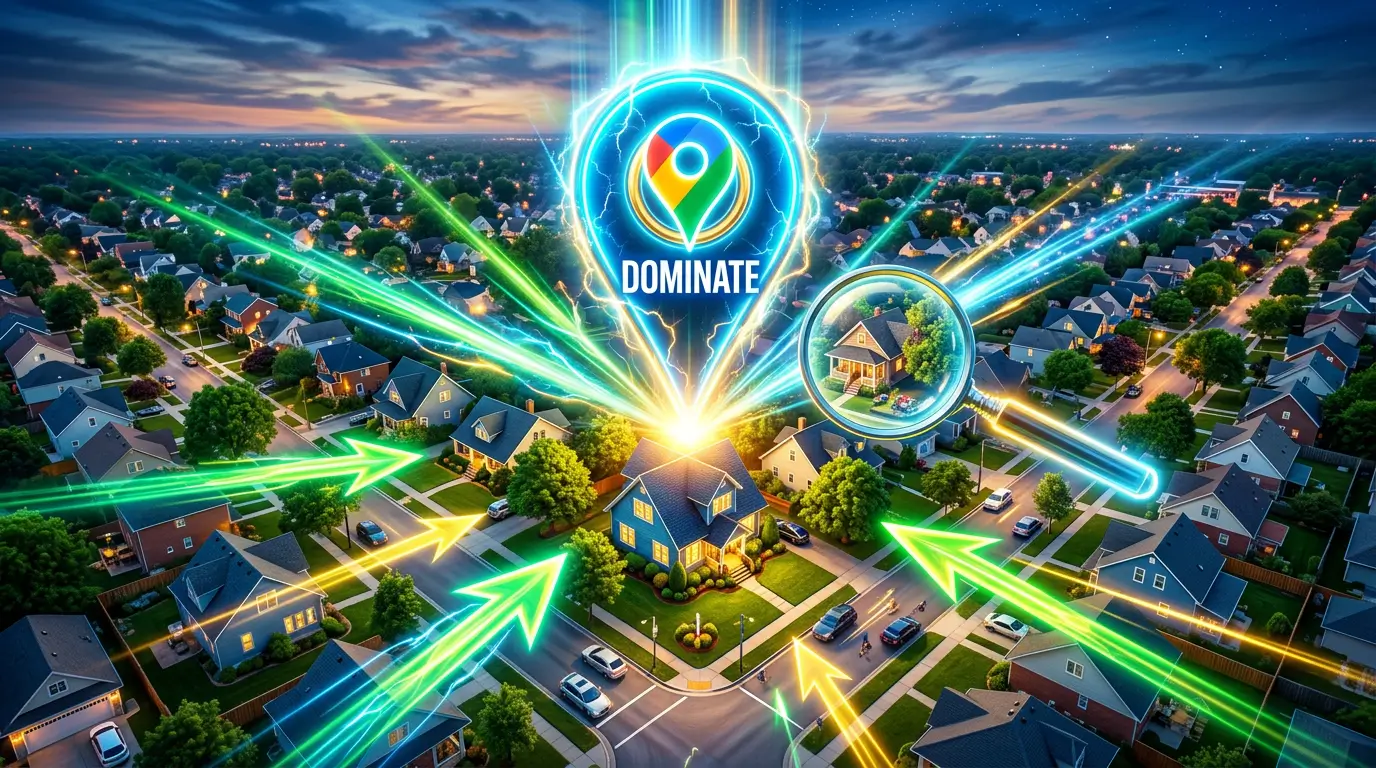
Hyperlocal SEO — the strategy of targeting ultra-specific geographic searches like “homes for sale in Willow Creek subdivision” or “best real estate agent in Eastlake” — is how smart real estate professionals are generating a steady stream of real estate leads in 2026 without spending a fortune on paid ads. This form of hyperlocal real estate marketing is quickly becoming the most effective digital marketing approach for agents who want to grow their real estate business.
The buyers and sellers searching for these neighborhood searches are further along in their journey. They already know where they want to buy or sell. They just need the right agent to guide them. That agent should be you.
In this guide, you’ll learn exactly how to build a hyperlocal SEO strategy that positions you as the undisputed neighborhood expert — and turns organic search traffic into real appointments. Whether you’re looking to attract local leads from search engines or build your online presence in local markets, hyperlocal marketing is the path forward.
Why Hyperlocal SEO Works Better Than Broad Real Estate SEO
The math is simple. A keyword like “homes for sale in Austin TX” gets tens of thousands of searches per month — but the top 10 results are all dominated by Zillow, Redfin, Realtor.com, and Homes.com. Your individual agent website has virtually zero chance of cracking page one.
Now consider “homes for sale in Mueller neighborhood Austin.” Far fewer searches — maybe 200-500 per month — but the competition is dramatically lower. The portals often have thin, generic pages for specific neighborhoods. A well-optimized page written by a local expert can absolutely rank on the first page.
Here’s why this matters for lead generation:
- Higher intent: Someone searching for a specific neighborhood is closer to making a decision — these are potential clients ready to act
- Less competition: Fewer agents are optimizing for micro-geographic terms, so you can generate leads and attract more leads with less effort
- Better conversion rates: Visitors who find local content with neighborhood insights are 3-5x more likely to fill out a contact form and become qualified leads
- Compounding returns: Each neighborhood page you create adds another lead generation asset that works 24/7, turning future clients into buyer and seller appointments
The agents who are winning with SEO in real estate in 2026 aren’t trying to be everything to everyone. They’re going deep on 10-20 neighborhoods and owning those search results completely. Combined with smart marketing strategies — like hosting an open house and promoting it through your hyperlocal blog — you can turn every piece of content into a lead generation machine that tracks market trends in real time.
Want a Hyperlocal SEO Strategy Built For You?
We help real estate agents dominate their target neighborhoods in Google search. Get a custom plan for your market.
The Hyperlocal SEO Playbook: 7 Steps to Neighborhood Domination
1. Choose Your Target Neighborhoods Strategically
Don’t try to create pages for every neighborhood in your metro area. Start with 5-10 neighborhoods where you have the best chance of success:
- Neighborhoods where you’ve closed deals — you have real expertise and testimonials
- Growing areas with new development — search demand is increasing but content is thin
- Higher price point areas — fewer transactions needed to justify the effort
- Neighborhoods you actually know — authenticity matters; people can tell when content is generic
Use Google’s Keyword Planner or a tool like Ahrefs to validate that people are actually searching for these neighborhoods. Look for terms like “[neighborhood] homes for sale,” “[neighborhood] real estate agent,” and “moving to [neighborhood].“
2. Build Dedicated Neighborhood Pages (Not Just Blog Posts)
This is where most agents go wrong. They write a single blog post about a neighborhood and expect it to rank forever. Instead, you need dedicated, evergreen neighborhood landing pages that you continuously update.
Each neighborhood page should include:
- Current market statistics (median price, days on market, inventory levels)
- School information with ratings and boundaries
- Walkability and commute data
- Local amenities and local landmarks (restaurants, parks, shopping, healthcare)
- Community vibe and lifestyle (who lives here, what’s the culture like, best practices for describing the area)
- Your personal insights as a local expert
- Current active listings (IDX integration or manual updates)
- A clear call-to-action for buyers and sellers
The key differentiator is your personal expertise. The portals can pull data from APIs. They can’t write “I’ve helped 15 families move into Willow Creek over the past three years, and the number one thing buyers love is the walking trail that connects to the elementary school.”
3. Optimize Your Google Business Profile for Each Area
Your Google Business Profile (GBP) is arguably more important than your website for hyperlocal SEO. The Google Map Pack appears above organic results for most local real estate searches, and it’s where agents can compete directly with the portals.
Here’s how to optimize your GBP for hyperlocal visibility:
- Primary category: Real Estate Agent (don’t change this)
- Business description: Mention your target neighborhoods naturally
- Posts: Share neighborhood updates, market reports, and new listings weekly
- Photos: Upload geotagged photos from your target neighborhoods
- Reviews: Ask clients to mention the specific neighborhood in their review (“John helped us find our dream home in Eastlake…”)
- Q&A: Pre-populate with neighborhood-specific questions and answers
Google’s algorithm heavily weights proximity and relevance. A fully optimized Google Business Profile creates a direct link between your name and your target neighborhoods. By consistently signaling expertise through your GBP, you’ll appear in the Map Pack for searches in those areas. You can also promote your newsletter and real estate sites directly through GBP posts.
4. Create Neighborhood Blog Content That Actually Ranks
Beyond your main neighborhood landing pages, you need supporting blog content that targets long-tail keywords. This is where you build topical authority.
High-performing content types for hyperlocal SEO:
- “Moving to [Neighborhood]” guides — comprehensive relocation content (one of the most frequently asked questions by relocating buyers)
- “[Neighborhood] vs [Neighborhood]” comparisons — captures comparative search intent
- Annual market reports — “[Neighborhood] Real Estate Market Report 2026”
- School district deep dives — parents are some of the most motivated searchers
- Local event guides — “Best Things to Do in [Neighborhood] This Spring”
- Development and construction updates — new builds, zoning changes, infrastructure projects
- “What [price range] Gets You in [Neighborhood]” — price-focused content converts extremely well
Each piece of content should link back to your main neighborhood landing page, creating a content cluster that signals topical authority to Google.
5. Nail the Technical SEO Basics
All the great content in the world won’t rank if your website has technical issues. Make sure you’ve covered these fundamentals:
Schema markup: Add LocalBusiness and RealEstateAgent schema to your site. Include your service areas at the neighborhood level, not just the city level.
Meta tags and page speed: Optimize your meta titles and descriptions for each neighborhood page. Your pages need to load in under 3 seconds on mobile. Compress images, use lazy loading, and choose a fast hosting provider. Google’s Core Web Vitals directly impact indexing and rankings.
Mobile optimization: Over 60% of real estate searches happen on mobile devices. Your neighborhood pages must be perfectly responsive with easy-to-tap CTAs and click-to-call buttons.
Internal linking: Create a logical site structure where your homepage links to city-level pages, city pages link to neighborhood pages, and neighborhood pages link to supporting blog content. This distributes link authority and helps Google understand your site’s geographic focus.
URL structure: Keep it clean and keyword-rich. /neighborhoods/willow-creek/ is better than /page-id-47382/.
Not Sure If Your Website Is SEO-Ready?
We'll audit your real estate website and identify the biggest opportunities to improve your local search rankings.
6. Build Local Backlinks That Move the Needle
Backlinks remain one of the strongest ranking factors in Google’s algorithm. For hyperlocal SEO, you need links from local sources — not random websites across the internet.
Effective local link-building strategies for agents:
- Sponsor local events, sports teams, or charities — most will link back to your website
- Get listed in neighborhood association directories — HOA websites, community pages
- Write guest posts for local blogs and news sites — offer market insights or neighborhood guides
- Partner with local businesses — cross-promote with mortgage brokers, home inspectors, moving companies, or even a local coffee shop to build your local presence
- Create linkable assets — neighborhood maps, market data infographics, cost-of-living calculators
- Contribute to local journalism — reach out to reporters covering real estate in your area through HARO or direct outreach
One high-quality backlink from your city’s newspaper or a popular local blog is worth more than 100 links from random directories. Whether you work at a large real estate brokerage or are an independent agent, focus on quality and geographic relevance.
7. Leverage Reviews and Social Proof at the Neighborhood Level
Reviews are a powerful ranking factor for local SEO, and they’re also what converts searchers into leads. But generic reviews aren’t enough — you need neighborhood-specific social proof.
After every closing, ask your clients to leave a Google review that mentions:
- The specific neighborhood where they bought or sold
- What they appreciated about your local knowledge
- Specific details about the experience (“helped us understand the Willow Creek HOA fees”)
These keyword-rich reviews help you rank for neighborhood-specific searches and convince prospects that you’re the local expert. An agent with 15 reviews mentioning “Eastlake” will dominate the Map Pack for Eastlake searches over a competitor with generic reviews.
Measuring Your Hyperlocal SEO Success
You can’t improve what you don’t measure. Track these metrics monthly:
- Keyword rankings for your target neighborhood terms (use a rank tracker like BrightLocal or Whitespark)
- Organic traffic to neighborhood pages (Google Analytics)
- Google Business Profile views and actions (GBP insights)
- Lead form submissions from neighborhood pages
- Phone calls from organic search (use call tracking numbers)
- Map Pack appearances for neighborhood-related searches
Most agents see meaningful ranking improvements within 3-6 months of consistent hyperlocal SEO work. The leads start as a trickle and build to a steady stream as Google recognizes your topical authority.
Common Mistakes That Kill Your Hyperlocal SEO
Thin content: Publishing 300-word neighborhood pages with nothing but MLS data. Google needs substantial, unique content to rank you above the portals.
Duplicate content: Copying and pasting the same template across all neighborhood pages, changing only the neighborhood name. Each page needs genuinely unique insights.
Neglecting updates: A neighborhood page with 2024 market data in 2026 signals to Google (and visitors) that you’re not active. Update your pages quarterly at minimum.
Ignoring Google Business Profile: Many agents optimize their website but neglect their GBP. In hyperlocal search, the Map Pack is often more valuable than organic results.
Targeting too many areas: It’s better to dominate 5 neighborhoods than have mediocre rankings in 50. Focus your resources on the areas with the highest ROI potential.
The Bottom Line: Hyperlocal SEO Is the Great Equalizer
Here’s what makes the power of hyperlocal SEO so significant for independent agents and small teams: it levels the playing field. Zillow can’t write from personal experience about your neighborhood. A national franchise can’t provide the street-level insights you have from years of working in your community.
The agents who commit to hyperlocal SEO in 2026 are building an asset that generates leads for years to come. Every neighborhood page, every blog post, every review compounds over time. While your competitors are paying $50-100 per lead on Zillow or spending thousands on Google Ads, you’re getting high-intent leads for free from organic search.
It takes work. It takes consistency. But the agents who invest in hyperlocal SEO today will be the dominant players in their markets for years to come.
The question isn’t whether hyperlocal SEO works — it’s whether you’ll be the agent who claims your neighborhoods before your competitors do.
Ready to Dominate Your Neighborhoods in Google?
Let us build your hyperlocal SEO strategy from the ground up. We'll identify your best target neighborhoods, create optimized content, and get you ranking where it matters most.