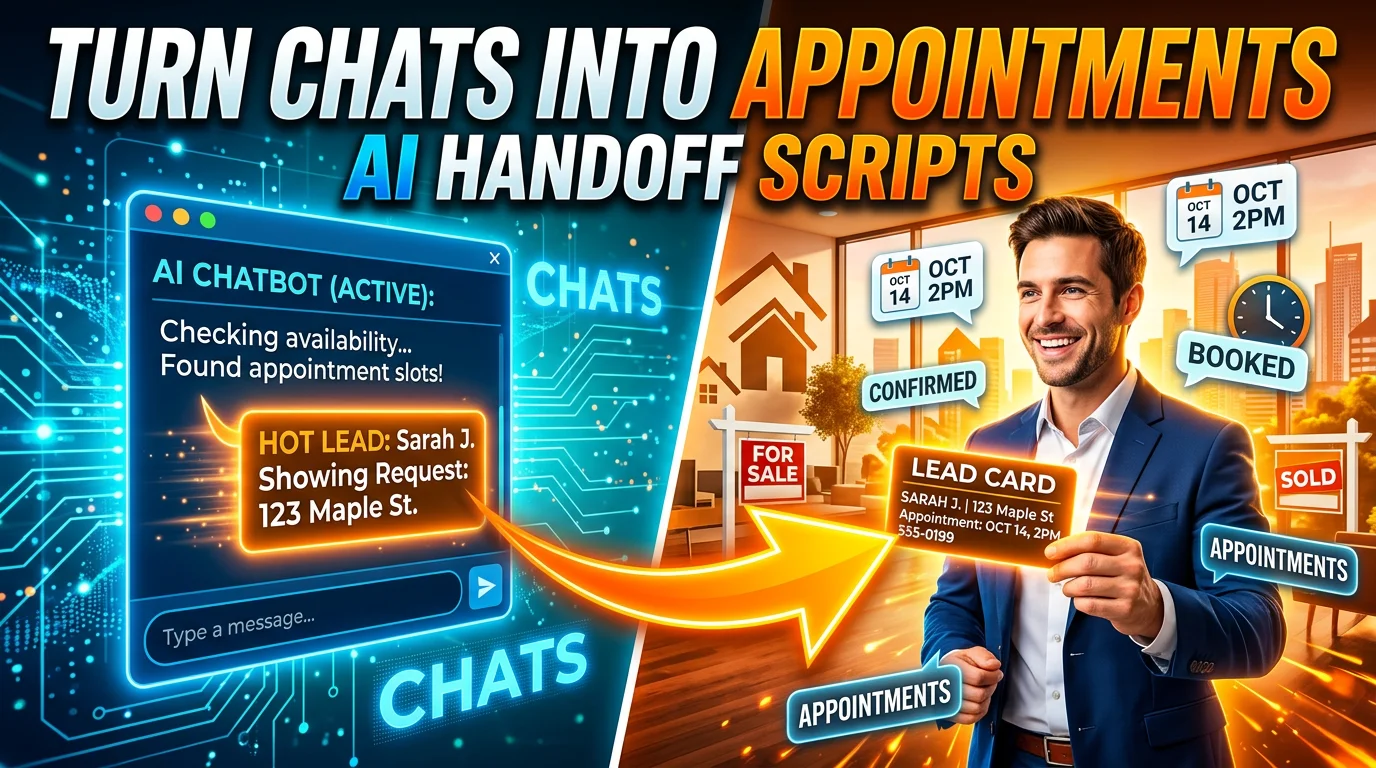
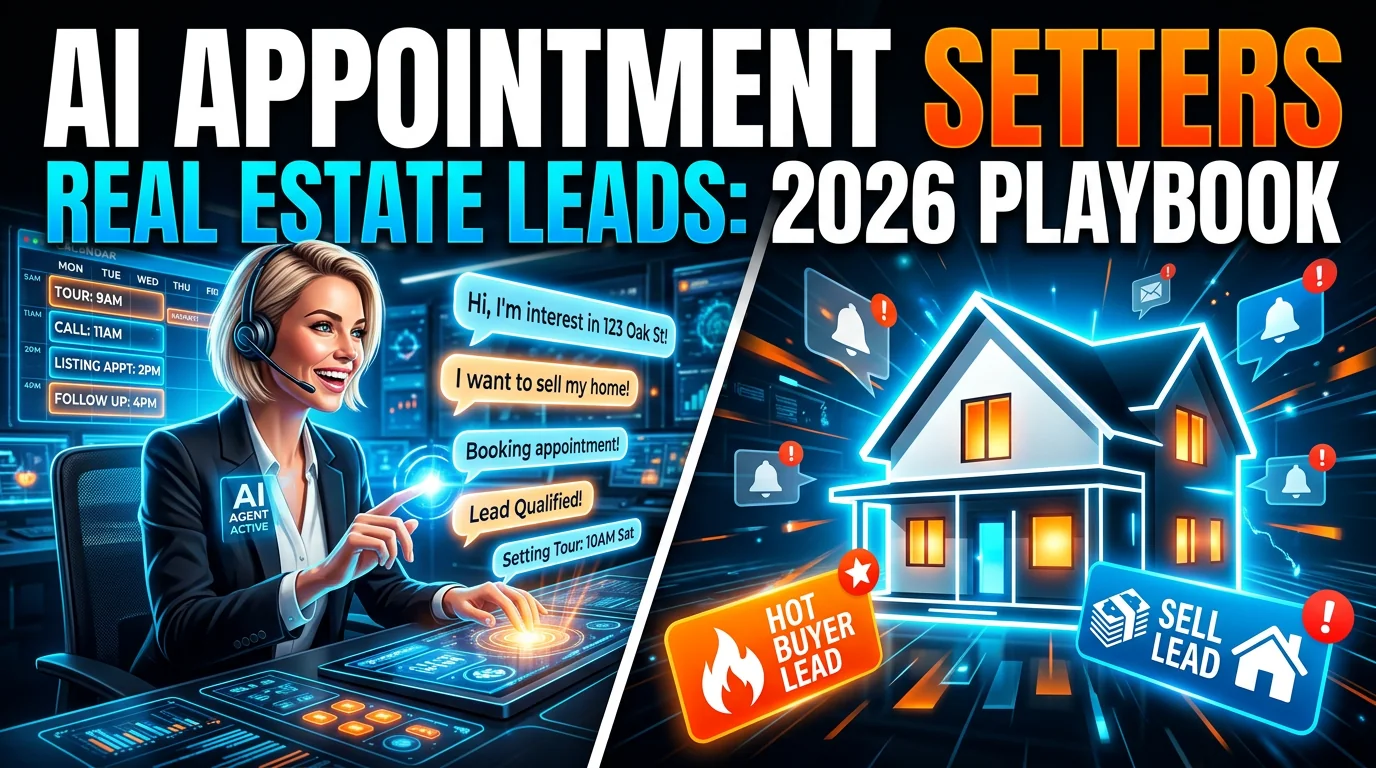
An AI chatbot handoff is the moment automation stops and the agent steps in. Get it right, and a website chat becomes a booked buyer consultation, seller valuation call, or showing request. Get it wrong, and even a qualified lead can disappear because the transition feels slow, generic, or robotic.
That matters because online real estate leads are getting harder to win. Buyers and sellers compare agents across Google, portals, social media, AI search, and local referrals before they ever raise their hand. The handoff script is where you prove there is a real professional behind the automation.
The agent who responds first with useful guidance has a massive advantage. But responding first manually is almost impossible if leads arrive while you are showing homes, sleeping, driving, or sitting in a listing appointment. That is where AI chatbots for real estate leads become practical: the bot captures context, then your handoff turns that context into a conversation.
What an AI Real Estate Chatbot Actually Does
A good real estate chatbot does much more than say, “How can I help you?” Modern AI lead qualification tools can understand natural language, ask follow-up questions, score intent, create CRM records, book appointments, and trigger personalized email or text sequences.
For buyer leads, the chatbot can ask about:
- Target neighborhoods or ZIP codes
- Price range and financing status
- Move timeline
- Whether they already have an agent
- Must-have features such as bedrooms, schools, commute, or property type
For seller leads, it can ask about:
- Property address
- Desired selling timeline
- Home condition
- Mortgage or equity situation
- Whether they need to buy before selling
- Motivation drivers such as relocation, downsizing, divorce, inheritance, or investment exit
The goal is not to interrogate people. The goal is to make the first conversation more useful. Instead of calling cold and asking basic questions from scratch, you can start with context: “I saw you are looking in East Cobb under $650,000 and want to move before school starts. I have three questions that will help us narrow this down.”
Why Chatbots Are Becoming a Lead Gen Advantage
Real estate lead generation has always rewarded speed, consistency, and relevance. AI improves all three.
First, chatbots respond instantly. A website visitor who asks about a listing at 10:47 p.m. does not have to wait until morning. They can get basic answers, request a showing, or share their timeline right away. If the lead is high-intent, the system can notify you immediately.
Second, chatbots create consistent follow-up. Most agents are good at following up when they are focused. The problem is life. A chatbot never forgets to ask the second question, send the resource, tag the lead, or move a prospect into the right nurture campaign.
Third, chatbots personalize the experience. Instead of dumping everyone into the same generic drip, you can trigger different paths for first-time buyers, cash buyers, move-up sellers, probate sellers, relocation clients, investors, and homeowners who are only curious about value.
Competitor research shows the same pattern: AI is being used for social content, predictive analytics, behavioral email, paid ad optimization, and chatbot qualification. The agents who benefit are the ones who connect it to a real operating system.
Want an AI Lead System Built Around Your Market?
We'll review your website, CRM, lead sources, and follow-up gaps, then map the AI chatbot and automation setup that makes sense for your business.
The Best Use Cases for Real Estate Chatbots
AI chatbots work best when they handle repetitive intake and routing while leaving relationship-building to the agent. Here are the highest-value use cases.
1. Website Lead Capture
Most real estate websites leak leads because the only conversion options are a form, phone number, or forced registration wall. A chatbot gives visitors a lower-friction way to start.
Instead of “Submit your information,” the prompt can be specific:
- “Want the newest listings in this neighborhood?”
- “Need help estimating your home’s value?”
- “Want to know what this payment looks like with today’s rates?”
- “Have a question about this property? Ask here.”
Those prompts match the visitor’s intent and make the chat feel like service instead of surveillance.
2. Seller Lead Qualification
Seller leads are valuable, but they vary wildly in readiness. Some homeowners want to list next month. Others are checking equity for a move two years away. A chatbot can separate those groups before you spend time chasing the wrong lead.
A strong seller chatbot flow asks for the address early, then collects timeline, motivation, and contact preference. If someone says they want to sell in the next 90 days, it should alert you immediately and offer a valuation consultation. If someone is 12 months out, it can send a local market report and place them into long-term seller nurture.
This pairs well with a dedicated home valuation funnel because the chatbot can turn a passive valuation visitor into a real conversation.
3. Buyer Showing Requests
Buyer leads often ask one urgent question: “Can I see this home?” A chatbot can collect preferred times, financing status, whether they have an agent, and what they liked about the property. It can also suggest similar listings if that home is already pending.
The key is transparency. Do not pretend the chatbot is personally unlocking the door. Use it to gather the details so you can respond fast and intelligently.
4. Open House Follow-Up
Open houses create a pile of names, but many agents follow up with the same bland text: “Thanks for stopping by.” A chatbot-assisted system can do better.
After visitors sign in, automation can ask what they thought of the home, whether they want similar listings, and if they need to sell before buying. Based on their answers, the system can route them into buyer nurture, seller nurture, or an immediate call task. For stronger scripts, connect this with your open house follow-up process.
5. Database Reactivation
Your old leads are often cheaper than new leads. A chatbot can help re-engage past internet leads, cold seller inquiries, old home valuation requests, and former open house visitors.
The message does not need to be complicated: “Are you still thinking about buying or selling in 2026, or should I update your preferences?” When someone replies, the AI can qualify their current situation and route them appropriately.
How to Build a Chatbot Flow That Converts
The biggest mistake agents make is installing a chatbot before designing the conversation. Technology will not save a weak offer or a confusing flow.
Start with one conversion goal. For most agents, the best first goal is either a buyer consultation, a showing request, or a seller valuation appointment. Do not ask the bot to do everything on day one.
Then map the minimum questions needed to qualify the lead. A buyer flow might need name, phone, email, target area, price range, financing status, timeline, and agent status. A seller flow might need address, timeline, motivation, condition, and best contact method.
Keep the tone conversational. People do not want to fill out a mortgage application inside a chat window. Use short questions, acknowledge answers, and make the next step obvious.
Finally, define escalation rules. These rules decide when the chatbot should notify you, create a task, or book directly on your calendar.
Hot lead triggers might include:
- Wants to buy or sell within 90 days
- Requests a showing
- Provides a property address
- Says they are pre-approved or paying cash
- Says they do not have an agent
- Asks about listing their home
- Returns to the site multiple times in a week
If a lead meets one of those triggers, speed matters. Connect the chatbot to your CRM and phone notifications so you can personally step in.
Stop Letting Website Leads Go Cold
We'll help you identify where leads are leaking, then build a practical capture, qualification, and follow-up system around your current tools.
What to Connect Your Chatbot To
A chatbot by itself is just a conversation box. The value comes from the integrations behind it.
At minimum, connect your chatbot to your CRM. Every conversation should create or update a lead record with source, tags, notes, answers, and next steps. If you are comparing platforms, start with the fundamentals in our guide to the best CRM for real estate agents.
Next, connect calendar booking. High-intent leads should be able to schedule a consultation without trading five messages about availability.
Then connect email and SMS nurture. A buyer who says they are six months out should receive different content than a seller who wants a listing appointment this week. This is where behavioral automation beats generic newsletters.
Finally, connect lead alerts. If the chatbot qualifies a hot prospect and the alert sits unread in your inbox, the system failed. Use push notifications, SMS alerts, Slack, or whatever channel you actually check.
How to Choose the Right AI Chatbot Setup
The best real estate chatbot is not always the flashiest platform. It is the one your real estate business needs: a real estate-specific system that can qualify leads, capture leads, and pass clean lead data into your CRM without creating extra admin work. A useful AI assistant should help agents respond faster, but it should also help real estate professionals protect the trust that wins appointments.
If you want to use AI for real estate lead generation, look for a real estate AI chatbot that includes live chat handoff, conversational AI, calendar booking, source tracking, and CRM sync. The chatbot for real estate should ask practical questions, not just generate friendly filler. A chatbot for lead capture should collect the address, timeline, budget, contact details, and motivation behind the move. In the best setups, the chatbot collects enough context to capture and qualify leads before you ever pick up the phone.
There are several ways to use AI in this workflow. Generative AI can draft answers, an AI agent can route hot prospects, ai bots can answer common listing questions, and an advanced AI tool can automate lead scoring. For real estate teams, real estate companies, real estate agencies, and even enterprise real estate groups, integrating AI into real estate operations creates a cleaner real estate workflow across ads, website chatbot conversations, email, SMS, and phone follow-up.
The right AI tools for real estate should also fit the reality of a competitive real estate market. Real estate AI tools, real estate CRMs, marketing tools, and ai lead generation tools should work together. If the chatbot engages website visitors but the CRM does not trigger lead generation and nurturing, the system breaks. If chatbots that qualify prospects do not alert a licensed real estate agent quickly, the lead still goes cold.
Here are a few chatbot examples worth modeling: a custom chatbot for seller valuations, a buyer showing bot, a database reactivation bot, and an open house follow-up bot. Each chatbot helps in a different moment, but the principle is the same: use useful AI to generate real estate leads, support ai sales conversations, and make leads in real estate easier to prioritize. AI for lead capture is not about replacing real conversations. AI saves time by making those conversations better.
Common Chatbot Mistakes Agents Should Avoid
Do not pretend the chatbot is human. Clear beats clever: “I’m the virtual assistant for Richard’s team” is better than a fake persona. Do not ask too many questions before giving value. Do not use one generic script for every source. And do not collect sensitive details you do not need. Chatbots can answer basic questions, but pricing advice, negotiation, representation, and legal guidance still require a real human.
The Bottom Line
AI chatbots for real estate leads are not magic. They will not fix a weak offer, a bad website, or a nonexistent follow-up process. But when they are connected to the right CRM, scripts, alerts, and nurture campaigns, they can protect your response time and qualify more prospects without adding more admin work.
The winning formula is simple: let AI handle instant intake, repetitive questions, segmentation, and reminders. Let the agent handle advice, trust, negotiation, and the real conversation.
That balance is where AI becomes practical lead generation instead of another shiny tool.
Ready to Turn AI Into Real Appointments?
Book a free consultation and we'll show you where an AI chatbot fits into your lead generation, CRM, and follow-up system.