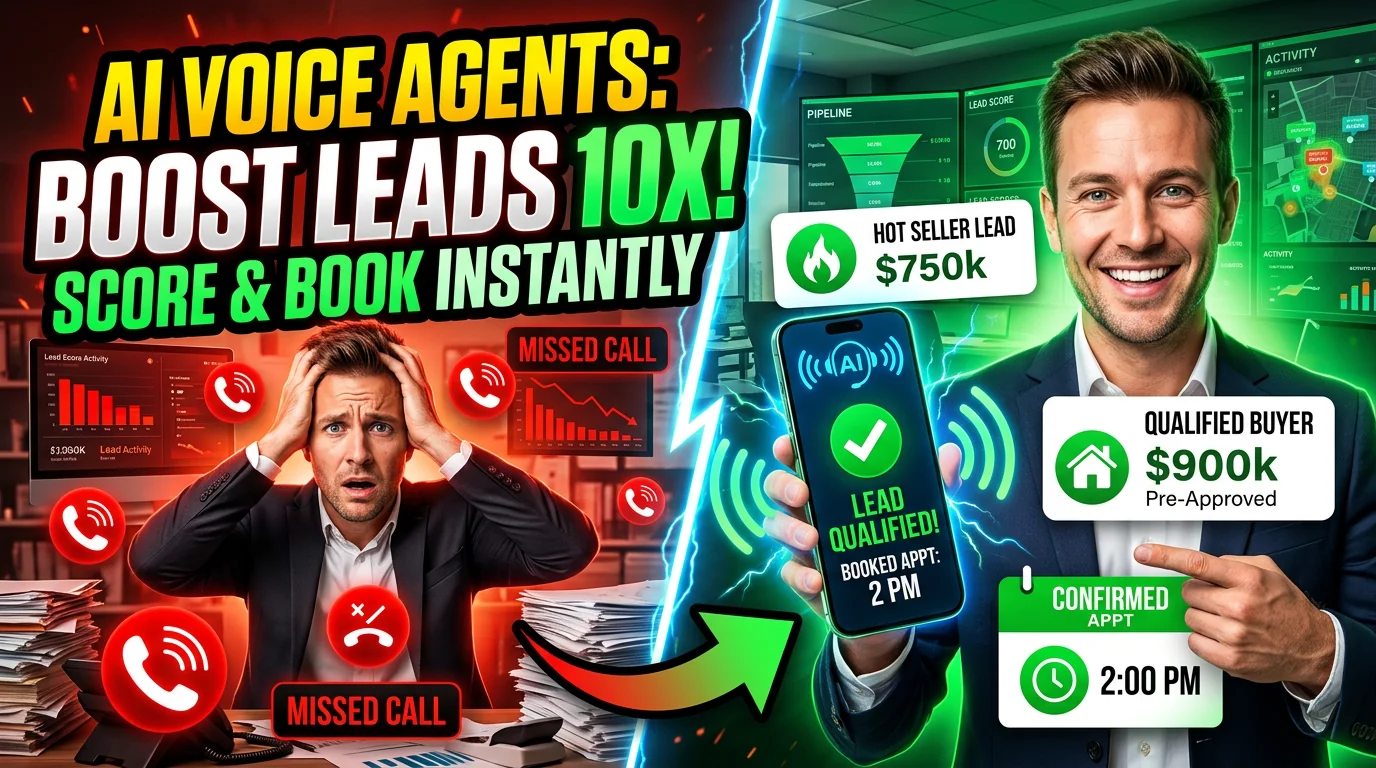
AI follow-up is becoming one of the clearest gaps between agents who buy leads and agents who convert them.
The old follow-up problem was simple: a new buyer or seller inquiry came in, the agent was showing homes, and the lead waited. The new problem is harder. Leads now come from Google, Facebook, portals, home valuation pages, IDX registrations, open houses, reviews, and old CRM contacts reactivated by automation. Every source expects an instant answer, but every lead is not equally valuable.
AI can help agents respond faster, prioritize better, and keep the conversation moving without forcing every prospect into the same generic drip campaign. Used well, it is the operating layer that catches new inquiries, asks smart questions, scores intent, routes the lead, and reminds the agent what to do next.
The key phrase is “used well.” A bad AI follow-up system makes you sound like a chatbot wearing a blazer. A good one helps real estate agents get to the right human conversation faster.
Want Faster Follow-Up Without More Busywork?
We help real estate agents build lead follow-up systems that respond quickly, prioritize high-intent prospects, and turn more inquiries into consultations.
Why AI follow-up is trending now
Real estate lead generation has become too fragmented for manual follow-up alone. Luxury Presence recently highlighted AI-powered social content, chatbots, predictive analytics, behavioral email, and AI-driven paid ads as major 2026 lead generation use cases. HomeStack’s 2026 lead generation ideas point in the same direction: agents are combining websites, CRM automation, lead scoring, saved searches, live chat, Google Local Services Ads, Facebook groups, and AI-powered prospecting into one system.
That is a lot of lead flow to manage.
The pressure comes from speed, context, and consistency. Speed matters because prospects compare agents quickly. Harvard Business Review’s classic lead response study found that firms contacting web leads within five minutes were far more likely to qualify them than firms waiting even 30 minutes. Context matters because a seller valuation lead, a first-time buyer, an investor, and a cold Facebook lead do not deserve the same message. Consistency matters because most agents are strong in bursts, then follow-up falls apart when business gets busy.
AI follow-up addresses all three. It can acknowledge the inquiry instantly, collect missing details, assign a lead score, push the right prospect into the right workflow, and create a task for the agent before the lead cools off.
What AI follow-up actually does
AI follow-up is the use of automation, language models, lead score logic, and CRM workflows to manage the first response and ongoing nurture after a prospect enters your database.
In a practical real estate CRM, that can include:
- Instant SMS or email replies after a form fill, showing request, home valuation, or open house sign-in
- AI chat or voice intake that asks about timing, price range, location, financing, property address, and motivation
- Real estate lead scoring that ranks each prospect based on fit, behavior, source, and urgency
- Suggested call scripts, text replies, email drafts, and next-best-action prompts for agents
- Long-term nurture that changes based on clicks, replies, saved searches, and market conditions
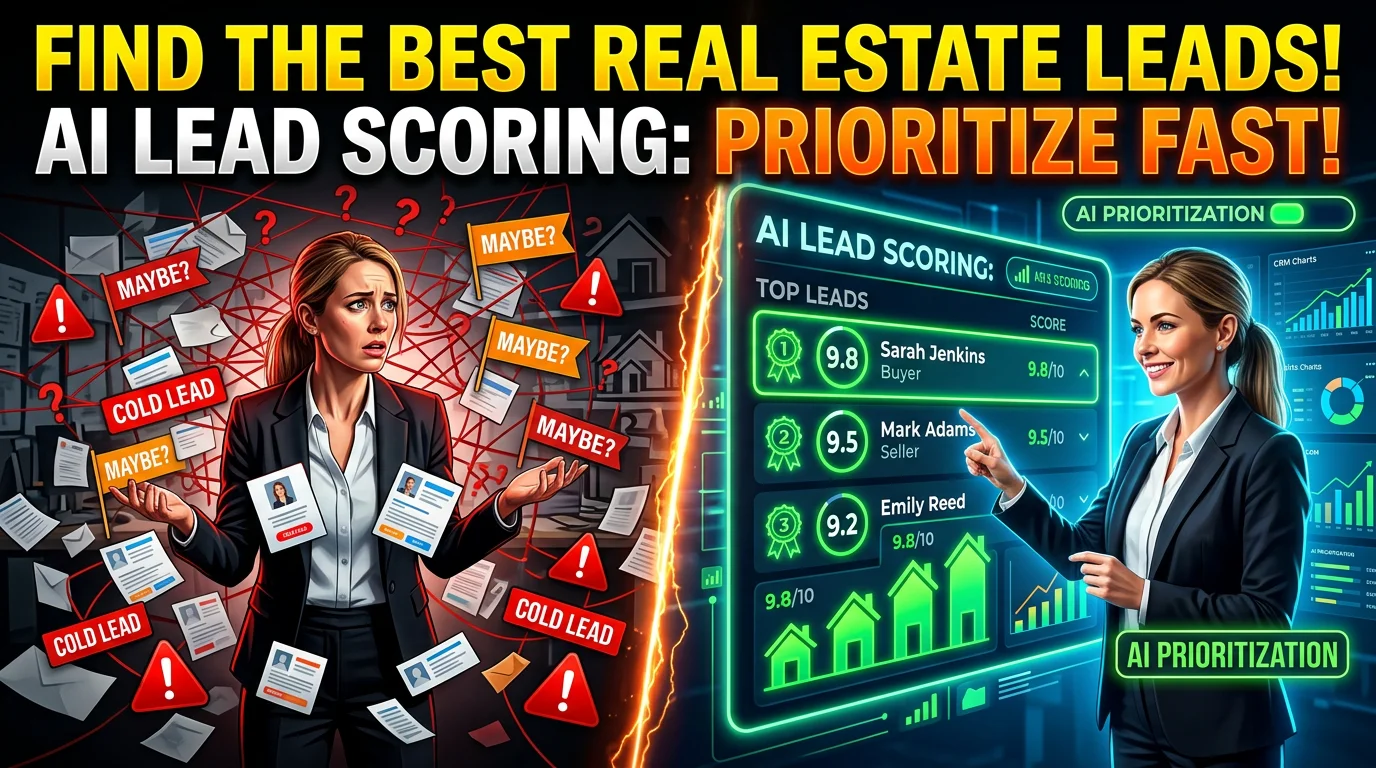
Lead scoring is the process of assigning value to a lead based on signals that suggest how likely they are to convert. AI lead scoring can look at more behavioral signals than a manual spreadsheet: MLS activity, repeat listing views, email engagement, inquiry source, appointment history, property type, and recency.
That does not mean the AI model should decide who gets service. It means your scoring model should identify and prioritize promising prospects.
Build the first five-minute response
Your first AI follow-up workflow should be boring, reliable, and fast.
Start with every lead source that creates a direct inquiry: contact forms, home valuation pages, showing requests, portal leads, Google Ads, Facebook lead forms, chatbot conversations, open house QR forms, and phone call captures. Each one should trigger a same-minute acknowledgment.
The message should sound like an agent, not a corporate autoresponder. For a buyer lead, that might be: “Thanks for reaching out. I saw you were looking at homes near East Nashville. Are you hoping to tour this week, or are you still comparing neighborhoods?” For a seller lead, it might be: “I got your valuation request for Oak Street. Are you looking for a quick estimate, or are you deciding whether to list in the next few months?”
The goal is not to close the client by text. The goal is to create a real opening, collect context, and move the lead to the right next step.
Then assign the workflow based on source and intent. A showing request needs a call, text, and appointment task. A seller consultation request needs an agent alert and CMA workflow. A newsletter signup can enter a slower nurture. Every lead should get a response, but every lead should not interrupt your day in the same way.
Use a lead score to separate hot leads from noise
Once instant response is handled, build a simple lead score. Keep it understandable. If agents do not trust the score, they will ignore it.
Give points for actions that show intent: requesting a showing, replying to a text, revisiting a saved search, viewing the same property more than once, asking for a home valuation, clicking a pricing page, booking a consultation, or calling from a listing page. Give fewer points for lighter actions such as opening a newsletter or downloading a broad guide.
Add fit criteria. Location, price range, property type, language, financing status, ownership status, and timeline help agents assign the right follow-up. A move-up seller in your farm area may be a better opportunity than an out-of-area buyer with no timeline.
Subtract points for bad data. Fake phone numbers, bounced emails, duplicate records, no-shows, out-of-market inquiries, and unsubscribes should lower the overall score.
This is where scoring real estate leads becomes useful. A good scoring system helps agents identify high-intent leads, prioritize leads with real urgency, and avoid spending premium time on low-fit contacts. The lead score does not replace judgment. It gives judgment better inputs.
Not Sure Which Leads Deserve Priority?
We can review your CRM, lead sources, and follow-up rules so your best buyer and seller opportunities stop getting buried.
Route leads based on what the AI learns
AI follow-up gets more powerful when it connects to routing.
A hot listing lead should not land in the same nurture as a buyer who downloaded a moving checklist. A luxury seller, first-time buyer, investor, relocation prospect, expired listing lead, and probate lead may all need different owners, scripts, and response times.
Use lead scores and AI intake data to assign every lead to one of three paths.
Hot leads have clear intent and short timing. They request showings, ask for valuations, reply by text, book calls, or repeatedly view the same homes. Route them to an available agent or ISA immediately, require call and text attempts, and escalate if nobody responds.
Warm leads show high engagement but may need education. They return to the site, click market updates, save searches, or ask broad questions. Assign them to an agent owner, add a personal follow-up task, and put them into segmented nurture.
Early-stage leads are still researching. They may download a guide, join a newsletter, or interact with a social ad. Automate helpful content, retargeting, market updates, and occasional human check-ins until behavior changes.
This kind of lead management helps real estate professionals streamline follow-up without losing the personal layer that actually creates trust.
Personalize without getting creepy
The best AI follow-up feels specific because it uses relevant context, not because it pretends to know everything about the prospect.
Use the details the lead gave you or clearly signaled: neighborhood, price range, property address, timeline, lead source, downloaded guide, listing viewed, or saved search. Avoid messages that mention sensitive inferred details unless the person provided them directly.
A good message says, “You were looking at homes under $650,000 in Cary. Want me to send the three best options that have open houses this weekend?” A creepy message says, “Based on your online behavior and equity position, you seem ready to sell.”
AI can draft the first version, but agents should control the tone. Create approved message templates for buyers, sellers, investors, past clients, and cold leads. Let AI adjust the variables, but keep your brand voice and compliance boundaries tight.
Keep humans in the moments that matter
The biggest mistake is letting AI carry the conversation too long.
AI-powered follow-up is excellent for acknowledgement, basic qualification, reminders, segmentation, and nurture. Humans are still better at motivation, pricing strategy, objection handling, negotiation, trust, and complex life situations. If a seller mentions divorce, inheritance, missed payments, or urgency, that is not a workflow. That is a human conversation.
Set handoff triggers. A human should step in when a lead asks about pricing, wants to tour, mentions a specific timeline, replies twice, has a high lead score, requests a consultation, or shares a sensitive situation.
Use lead scores to help agents, not hide behind automation. The point is to create more real conversations with the right prospects.
Measure the system like a pipeline
AI follow-up should improve conversion rates, not just create more activity.
Track response time by source, reply rate, appointment rate, no-show rate, consultation rate, signed agreement rate, and closed deals. Compare hot leads, warm leads, and early-stage leads separately. If your overall score looks good but hot seller leads are not booking calls, the workflow is failing.
Also track agent adoption. Are agents using suggested replies, completing tasks, overriding the lead score, or marking bad recommendations? The system gets better when agents give feedback.
Finally, review conversations weekly. Look for awkward phrases, unanswered questions, dead-end flows, and leads that should have escalated sooner. AI follow-up is a process you tune.
A simple AI follow-up stack for agents
You do not need a massive technology rebuild to start. Begin with a lead capture source, a modern CRM, instant response templates, and scoring rules your team understands.
Lead scoring in real estate works best when it stays practical. Lead scoring comes down to the process of ranking prospects by fit, behavior, and level of urgency. The system that assigns values to leads should use real estate data such as property views, saved searches, replies, source quality, and appointment requests. That process of assigning a numerical value creates a higher score for prospects most likely to become customers, not just people who clicked once.
Effective scoring strategies help agents focus on the leads who are actively showing intent. A lead’s likelihood to buy or sell should rise when they request a showing, ask for a valuation, view the same property multiple times, or move the conversation toward an appointment. It should fall for unqualified leads, bad contact data, and low-fit inquiries.
This is where lead qualification becomes essential for real estate teams. AI-powered lead tools like chat, voice intake, enrichment, and behavioral automation can help identify promising leads using real-time signals, allowing agents to focus their time and resources where sales efficiency improves. Agents can prioritize high-intent leads, score leads consistently, and close deals faster because the workflow tells them which prospects are likely to convert.
If your CRM already supports automation, start there. Connect your highest-value sources first: seller leads, showing requests, Google Ads, portal inquiries, and past-client referrals. Then write response templates, create scoring criteria, add routing, and review high scores weekly. Using real estate follow-up this way helps real estate professionals optimize your lead generation without turning every conversation over to software.
The bottom line
AI follow-up helps agents respond quickly, score leads fairly, assign the right next step, and keep nurture consistent when the market gets busy. That can help real estate agents close more deals from the leads they already generate.
But AI is not the strategy. The strategy is better timing, better context, better prioritization, and better human conversations.
If your current follow-up depends on memory, sticky notes, and weekend catch-up sessions, AI can be a serious upgrade. Start with instant response, build a lead scoring model, route high-intent leads, and keep humans in the moments where trust is created.
Build a Follow-Up System That Converts
Get a practical review of your lead sources, CRM stages, response templates, and consultation path so fewer opportunities slip through the cracks.