A real estate lead rarely arrives when your calendar is empty. It shows up while you’re in a listing appointment, driving between showings, negotiating repairs, or trying to eat dinner without checking your phone every two minutes.
That timing problem is why AI voice agents are becoming practical lead generation infrastructure for real estate agents.
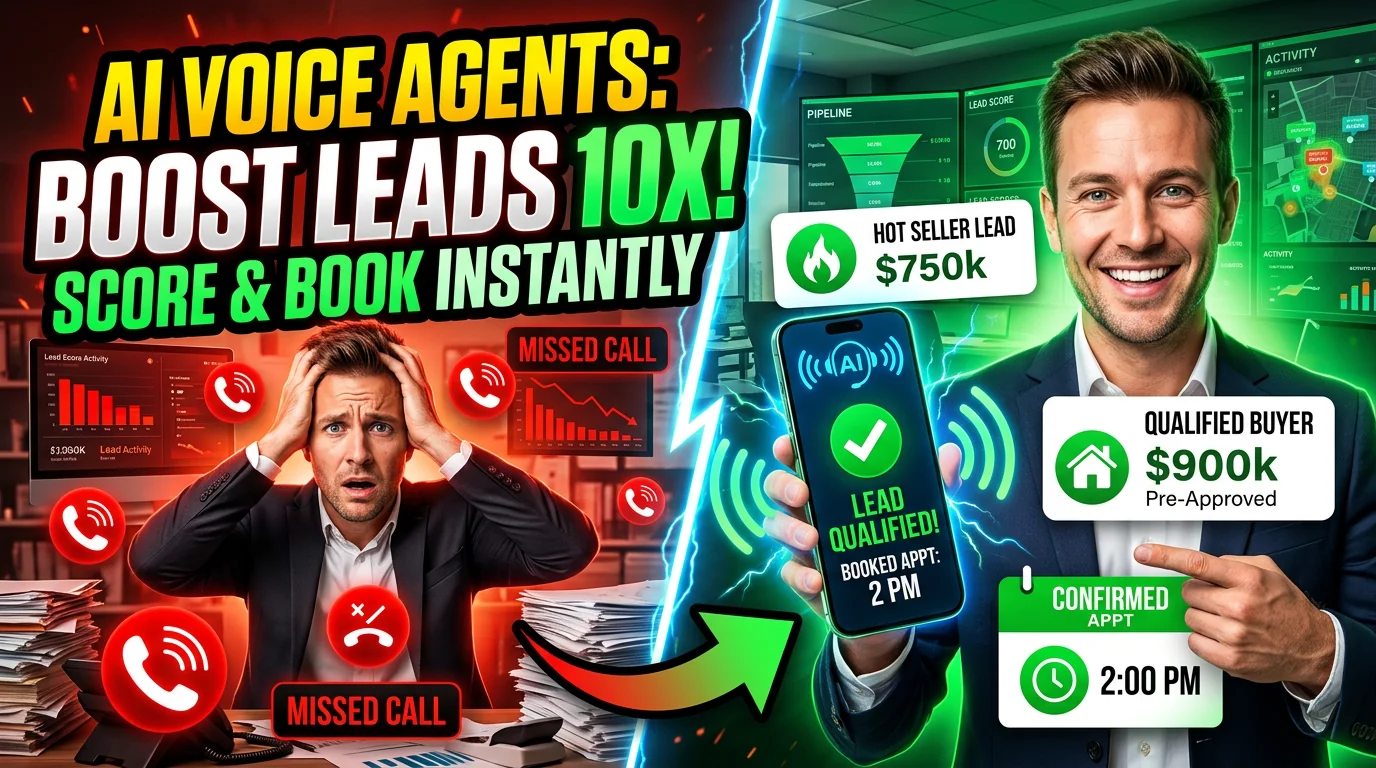
An AI voice agent is not just voicemail with a nicer voice. The useful versions answer inbound calls, call new web leads, ask qualification questions, summarize the conversation, assign a lead score, book appointments, and update the CRM. Done well, voice AI gives agents faster response, cleaner qualification, and a better handoff to the human who can win the client.
Done badly, it becomes awkward automation that annoys prospects.
This guide explains where AI voice agents fit, how to qualify buyer and seller leads, how real estate lead scoring should work, and what to measure before you scale it.
Why AI voice agents are trending now
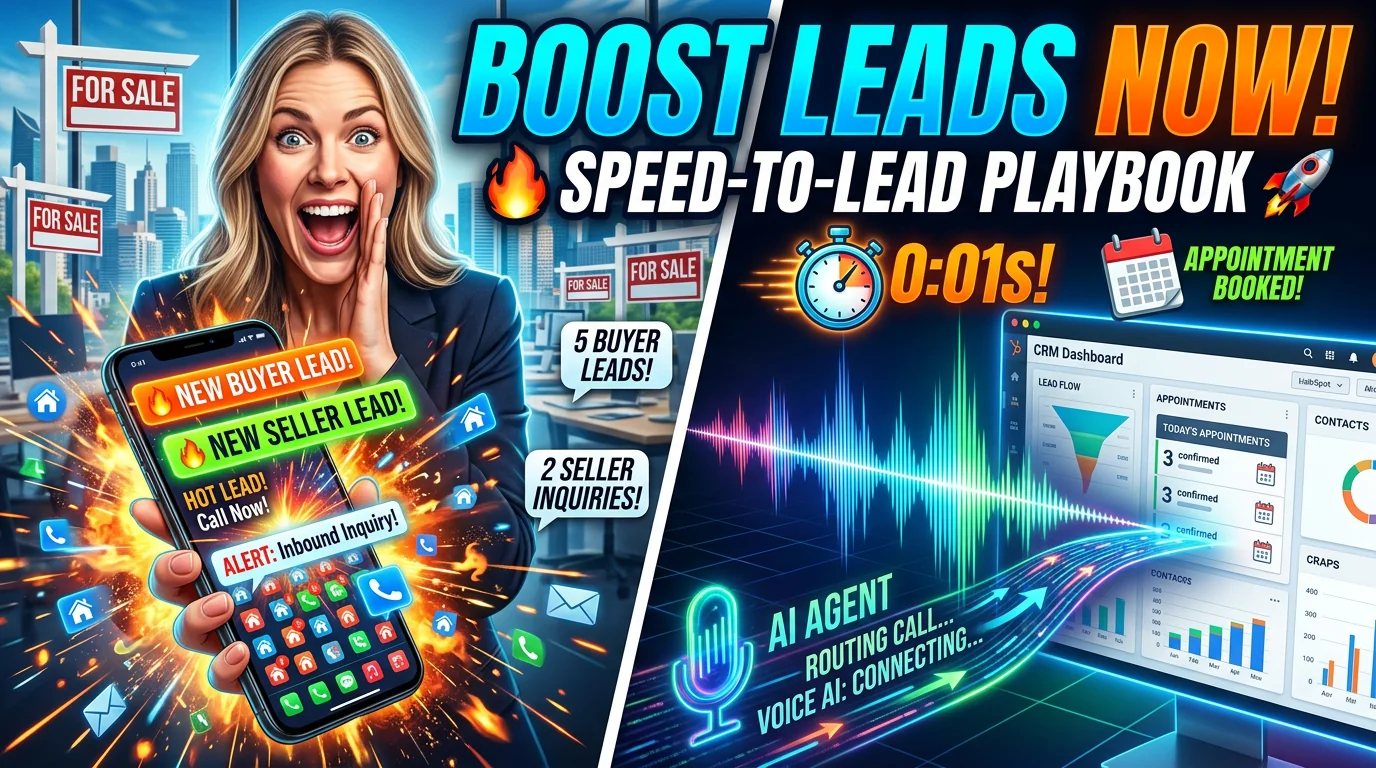
Real estate has always had a speed-to-lead problem. A buyer requests a showing and keeps browsing. A homeowner asks for a valuation and checks three other sites. A referral calls once and leaves no message. The first agent to create a real conversation usually has the advantage.
Recent voice AI coverage points to the same shift. Monday.com’s 2026 guide describes AI voice agents that answer calls, qualify leads, book showings, and log details automatically. CloudTalk’s 2026 review highlights 24/7 lead capture, appointment scheduling, lead qualification, automatic CRM updates, and routing. Retell AI frames voice agents around qualification and appointment booking, not just call answering.
The common theme is coverage, not replacement.
You probably do not need a robot to negotiate a contract. You do need a reliable first responder that catches every lead while intent is hot, gathers the right details, and sends the prospect to the right next step.
That makes voice AI especially useful when it connects to your CRM, calendar, lead source tracking, lead routing, and AI lead scoring.
Want Faster Lead Response Without Hiring Another ISA?
We'll map your lead sources, response gaps, qualification questions, and CRM workflow so you can convert more inquiries into appointments.
What an AI voice agent should actually do
The best real estate AI voice agent has one job: turn an unstructured inquiry into a qualified next step.
That requires five things. First, it needs to respond quickly. For inbound calls, it answers when you or your team cannot. For web leads, it can trigger an immediate call or text after someone requests a showing, downloads a guide, or completes a home valuation funnel.
Second, it needs to identify the prospect. It should collect or confirm the name, phone number, email, property address if relevant, lead source, and reason for the call.
Third, it needs to qualify intent. A buyer lead needs questions about price range, location, financing, timeline, agent representation, and must-have criteria. A seller lead needs questions about property address, moving timeline, motivation, home condition, and whether they have already interviewed agents.
Fourth, it should score and route the lead. A pre-approved buyer who wants to tour this weekend should not receive the same workflow as a casual browser six months out. A seller in your target farm who wants a listing consultation within 30 days should not sit in a generic nurture sequence.
Fifth, the AI should create a human handoff. That can be a booked call, a showing request, a hot-transfer call, a task for an ISA, or a follow-up sequence based on the lead’s score.
If your AI voice agent only chats but does not update the real estate CRM, score leads, or trigger follow-up, it is a toy. If it captures structured data and moves prospects forward, it becomes part of your lead management system.
Buyer and seller qualification scripts
Buyer leads need quick qualification without feeling interrogated. A strong voice agent should ask what property or area caught their eye, whether they are buying soon or just researching, what price range feels comfortable, whether they are pre-approved, whether they are already working with another agent, and whether they want a private showing or buyer strategy call.
Those answers should feed the buyer’s lead score. A high-intent buyer might be searching a specific neighborhood, has financing started, is not represented, and wants to see a property in the next few days. That lead deserves an immediate alert. A medium-intent buyer might know the area and budget but is three to six months out. That lead belongs in nurture with saved searches, lender education, and periodic human check-ins.
Seller leads deserve an even tighter script because one listing appointment can be worth so much. The AI should confirm the property address, ask whether the homeowner is thinking about selling or just checking the market, learn the ideal timeline, ask about updates or repairs, and offer a pricing call or listing consultation.
The seller lead score should weigh timeline, property fit, location, motivation, engagement, and whether the homeowner agrees to a meeting. A homeowner who requests a valuation at 10:30 p.m. may not expect a live agent instantly, but they do expect fast confirmation that someone will help. A voice agent can confirm the address, ask about timeline, and offer an appointment while the lead is still thinking about home value.
Turn Seller Inquiries Into Listing Appointments
We help real estate agents build seller lead systems that qualify motivation, prioritize hot homeowners, and book the right follow-up fast.
How the lead scoring model should rank conversations
Lead scoring is the process of assigning a numerical value to a lead based on their actions, fit, intent, and level of urgency. In plain English, the scoring system helps agents identify and prioritize the real estate leads who are actively raising their hand, so agents can prioritize high-intent leads instead of spending the same time on leads who are unlikely to move.
This is where AI lead scoring and voice AI become powerful together. The voice agent gathers behavioral signals from the conversation. The real estate CRM stores those details. The lead scoring model turns them into an overall score. Then agents can focus their time and resources on promising prospects most likely to become customers, close deals faster, and improve conversion rates.
A practical model for scoring real estate leads should assign points for urgency, fit, engagement, and next-step commitment. For example, a buyer who mentions specific property views, has lender activity, asks about MLS listings, and agrees to a showing earns a higher score than someone casually browsing. A homeowner who requests a valuation, mentions repairs, talks about market conditions, and books a pricing call should become one of your hot leads.
The key is not to let the AI model invent vague numbers. Your scoring rules should be simple enough for real estate professionals to trust. A lead’s score should explain why it changed. Did the prospect ask for a tour? Did the seller say they want to list within 60 days? Did the buyer already have pre-approval? Those scoring criteria matter more than vanity automation.
Effective scoring real estate workflows score leads in real-time, assign high scores to people with clear intent, use lead scores to route hot leads, and send unqualified leads into nurture. Lead scoring comes down to one question: which prospects have the highest likelihood to buy or sell, and what should happen next?
This is also how agents close more deals without chasing every lead manually. Using real estate automation to prioritize leads is not about removing the human touch. It is about allowing agents to focus their time on promising leads, high engagement conversations, and prospects most likely to move the conversation forward.
CRM workflow and compliance guardrails
The CRM is where most voice AI projects either become profitable or fall apart. If the AI conversation lives in a separate dashboard nobody checks, it will not improve conversion.
At minimum, the voice agent should create or update the contact record, attach the transcript, summarize the conversation, tag the lead source, assign a lead score, and create the next task. A hot seller lead could trigger an agent text with address, motivation, timeline, and requested appointment time. A colder buyer lead could trigger a saved search, lender education, monthly market update, and call reminder.
This is why voice AI should not be treated as a standalone gadget. It is part of real estate lead management. The call only matters if it changes what your team does next.
You also need guardrails. Outbound calling, texts, artificial voices, prerecorded messages, and cold outreach can trigger TCPA, state-level telemarketing, Do Not Call, and brokerage compliance issues. Start with inbound calls and form-fill follow-up where the consumer requested contact. Ask your broker and legal counsel before using AI for batch outbound campaigns.
Be honest, too. A simple line like “I’m the team’s virtual assistant” sets the right expectation. The AI should not give legal advice, promise property values, negotiate offers, discuss fair housing topics in a risky way, or answer questions it cannot verify. When the conversation gets sensitive or high value, it should escalate to a human.
Metrics that prove whether voice AI is working
Do not judge an AI voice agent by how cool it sounds. Judge it by pipeline movement.
Track missed call rate, average speed to first response, contact rate by source, qualified lead rate, appointment booking rate, show rate, cost per qualified appointment, lead score accuracy, human takeover rate, and closed transactions by source.
The most important metric is not total calls handled. It is qualified appointments created from leads that would otherwise have gone unanswered, unqualified, or untouched for hours.
If the AI increases conversations but books weak appointments, tighten the script and scoring strategies. If it qualifies well but agents do not follow up, fix routing and accountability. If consumers hang up quickly, improve the opening, voice, timing, or disclosure.
Voice AI is not magic. It is a conversion system. Systems need measurement.
A simple launch plan
Do not automate everything on day one. Start with one high-value use case, like missed inbound calls or fresh web leads from your website, Google Ads, Facebook Ads, or portal inquiries. Choose a source where speed matters and the script is predictable.
Build one buyer script and one seller script. Keep them short. The goal is to qualify and book, not run a 20-minute interview.
Connect the AI to your CRM and calendar before you send real traffic. Test the handoff with fake leads. Make sure notes, tags, scores, tasks, and appointments land correctly.
Then run a two-week pilot. Review every transcript. Compare results against your normal speed-to-lead, contact rate, and appointment rate. Adjust questions, scoring rules, and escalation triggers.
Only after that should you expand to more lead sources, languages, after-hours coverage, database reactivation, or advanced outbound workflows.
Build an AI-Ready Real Estate Lead System
We'll help you design a practical lead generation workflow with faster response, better qualification, smart scoring, and human follow-up where it matters most.
Bottom line
AI voice agents are useful in the real estate industry because they solve a specific, expensive problem: leads lose value when nobody responds, qualifies, scores, and routes them quickly.
Used well, voice AI can answer after-hours calls, follow up with fresh web leads, qualify buyers and sellers, book appointments, update the CRM, and help agents focus on the prospects most likely to convert.
Used badly, it creates noise.
Start with the lead sources where response time matters most. Ask only the questions needed to determine intent and next step. Score the lead based on urgency and fit. Route hot opportunities to a human fast. Keep reviewing the conversations. That is how AI voice agents move from gimmick to real estate lead generation asset.