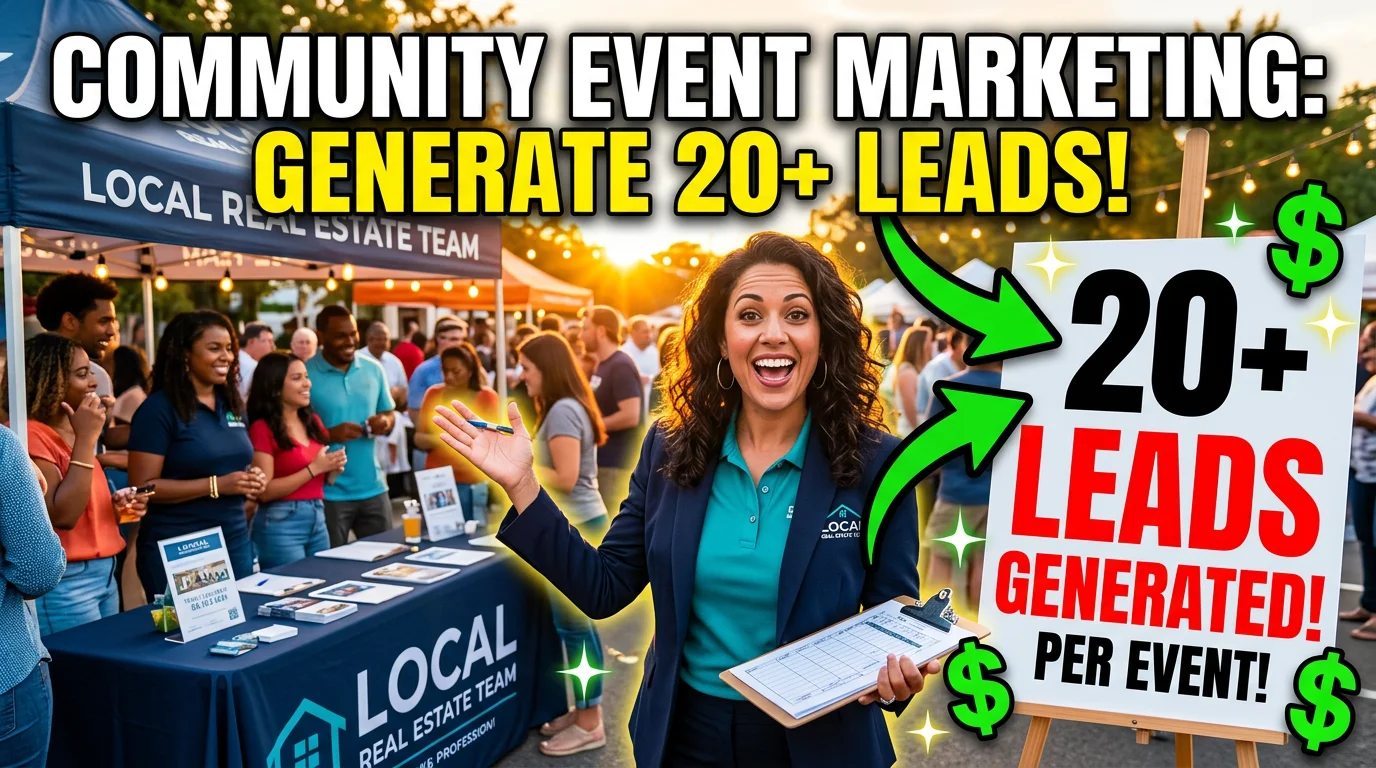
In an era of social media fatigue and ad blindness, the smartest real estate agents are going back to basics — and crushing it. Community event marketing is quietly becoming one of the highest-ROI lead generation strategies in real estate, with top-performing agents reporting 20 or more qualified leads from a single well-executed event.
While most agents are fighting over the same Facebook ad audience and paying $15-$50 per lead on Zillow, event-driven agents are building face-to-face relationships that convert at three to five times the rate of cold online leads. The best part? Many of these events cost less than a single month of paid advertising.
Here’s exactly how to plan, execute, and extract maximum leads from community events — whether you’re a new agent just building your real estate business or a seasoned real estate professional running a team.
The numbers tell a compelling story. According to the National Association of Realtors, 41% of buyers chose their agent based on a personal referral or prior relationship. Community events create exactly those relationships — at scale.
Here’s what makes event-based leads different from digital leads:
- Build trust and credibility instantly. Meeting someone face-to-face creates instant rapport that no landing page can replicate. You build trust by showing up in person
- Self-qualifying attendees. People who show up to a homebuyer workshop are actively thinking about real estate
- Lower competition. While hundreds of agents bid on the same Google keywords, very few invest in local events
- Long-tail referral engine. One attendee who has a great experience tells friends, family, and coworkers about you for years
- Community positioning. You become “the real estate agent who does things for the neighborhood” — not just another name on a bus bench
Building relationships through community engagement is the future of real estate lead generation. Events provide a natural environment for connecting with potential buyers and sellers in your local market. Whether someone is looking to buy or sell, meeting you at a community event creates a personal connection that no online ad can match. Even your brokerage benefits from the brand awareness these events generate.
The key shift happening right now is that consumers are craving authentic, in-person connections. Social media engagement rates have been declining steadily, and people are increasingly skeptical of online advertising. That creates a massive opportunity for agents willing to show up in person.
Want a Custom Event Marketing Strategy?
We'll help you plan community events that generate qualified leads on autopilot. Get a personalized lead generation plan tailored to your market.
Not all events are created equal. Here are the event formats that consistently generate the most leads, ranked by effectiveness and ease of execution.
1. First-Time Homebuyer Workshops
This is the gold standard of real estate event marketing. A free educational workshop positions you as the expert while attracting highly motivated buyers who are actively entering the market.
How to execute it:
- Partner with a local mortgage lender who will co-host and split costs
- Book a free or low-cost venue like a library meeting room, community center, or local brewery
- Cover topics like credit preparation, down payment programs, the home buying process, and what to expect when buying a home at closing
- Limit attendance to 20-30 people to keep it intimate and allow for Q&A
- Collect contact information at registration (use a simple Google Form or Eventbrite)
Expected results: 15-30 registrations per event, with 60-70% attendance rate. Expect 3-5 of those attendees to become active buyer clients within 90 days. This works especially well for people looking to relocate to your area — they’re actively searching for an experienced broker they can trust.
2. Neighborhood Market Update Happy Hours
Invite homeowners in a specific neighborhood to a casual happy hour where you present a 15-minute market update for their area. Show recent sales, price trends, and what their home might be worth.
This format works exceptionally well for generating seller leads because homeowners are naturally curious about their home’s value — especially when you make it social and low-pressure.
Pro tip: Partner with a local restaurant or bar. They get foot traffic on a slow night, you get a free venue with built-in ambiance.
3. Home Maintenance and DIY Workshops
Partner with a local hardware store, contractor, or home inspector to host seasonal home maintenance workshops. Topics like “Winterize Your Home in 60 Minutes” or “Spring Cleaning Checklist for Homeowners” attract homeowners who may be thinking about selling in the near future.
These events work because they provide genuine, non-salesy value. You’re not pitching your services — you’re helping people take care of their biggest investment. The goodwill this creates is enormous.
4. Community Clean-Up and Charity Events
Organize a neighborhood clean-up day, food drive, or charity fundraiser. These events position you as a community leader and attract media attention that money can’t buy.
The lead generation angle: Create sign-up sheets, branded t-shirts, and social media content from the event. Every participant becomes a contact in your database, and the social proof from photos and videos fuels your digital marketing for months.
5. Local Business Networking Mixers
Host a monthly or quarterly mixer for local business owners. Bring together mortgage brokers, home inspectors, contractors, interior designers, and other professionals in a casual setting.
This creates a referral network that feeds you leads consistently. When a contractor meets a homeowner who mentions wanting to sell, your name should be the first one they think of.
6. Farmer’s Market Booths and Seasonal Block Parties
Set up a booth at your local farmer’s market with free home valuation postcards and market reports. Farmer’s markets attract homeowners who are invested in their community — exactly the type of client appreciation-worthy contacts you want. Combine this with seasonal block parties like Fourth of July barbecues, fall festivals, and holiday cookie decorating for year-round brand building. These aren’t hard-sell events. They’re brand-building investments that pay dividends for years.
Budget tip: Ask local businesses to sponsor food, drinks, or activities in exchange for co-branding. A typical block party can be organized for under $500 when you leverage partnerships.
7. Investment Property Seminars
If you work with investors, host seminars on topics like rental property ROI analysis, 1031 exchanges, or identifying undervalued markets. Investor leads tend to be repeat clients who transact multiple times per year.
How to Maximize Lead Capture at Every Event
Hosting a great event means nothing if you don’t capture contact information effectively. Here’s the lead capture system that top event-marketing agents use:
Before the Event
- Create a dedicated landing page for each event with a registration form
- Require email and phone number at registration — this is your primary lead capture point
- Send reminder emails 3 days and 1 day before the event with “Add to Calendar” links
- Promote on social media with countdown posts and behind-the-scenes content
- Use Facebook Events to create a shareable listing that extends your organic reach
During the Event
- Place a sign-in sheet at the entrance (digital is better — use a tablet with a Google Form)
- Offer a door prize drawing that requires a business card or contact form to enter
- Distribute a takeaway resource (market report, buyer guide, checklist) that includes your branding and a QR code to your website
- Have a “text for updates” keyword displayed on signage (e.g., “Text HOME to 55555 for market updates”)
- Take photos and videos — with permission — for post-event content
After the Event
This is where most agents drop the ball. The fortune is in the follow-up.
- Send a thank-you email within 24 hours that includes any promised resources
- Add all contacts to an agent database (your CRM) with the event tagged as the lead source
- Connect on social media with personalized messages referencing the event
- Schedule followup calls for the hottest potential buyers and sellers within 48 hours
- Post event recap content on social media and tag attendees
Need Help Building Your Event Follow-Up System?
Our lead generation experts will set up automated follow-up sequences that convert event attendees into clients. Stop leaving money on the table.
Event Marketing Budget Breakdown
One of the biggest misconceptions about community event marketing is that it’s expensive. Here’s what realistic event budgets look like:
Homebuyer Workshop (co-hosted with lender):
- Venue: $0-$200 (library, community center, or partner office)
- Refreshments: $50-$100
- Printed materials: $30-$50
- Facebook/Instagram ads for promotion: $50-$100
- Total: $130-$450
- Expected leads: 15-25
- Cost per lead: $5-$30
Compare that to the average cost per lead on major platforms:
- Zillow Premier Agent: $20-$70 per lead
- Realtor.com: $20-$50 per lead
- Google Ads: $15-$40 per lead
- Facebook Ads: $5-$25 per lead
Community events consistently deliver some of the lowest cost-per-lead numbers in real estate marketing — and the lead quality is significantly higher because of the face-to-face relationship.
Happy Hour Market Update:
- Venue: $0 (partner with a local restaurant)
- Appetizers/drinks: $200-$400
- Printed market reports: $20-$40
- Total: $220-$440
- Expected leads: 10-20
- Cost per lead: $11-$44
Community Clean-Up:
- Supplies: $50-$100
- Branded t-shirts: $150-$300
- Refreshments: $50-$100
- Total: $250-$500
- Expected leads: 15-30
- Cost per lead: $8-$33
Scaling Your Event Strategy: The 12-Month Calendar
The most successful event-marketing agents don’t host random one-off events. They create a predictable annual calendar that builds momentum and brand recognition throughout the year.
Here’s a sample 12-month event calendar:
- January: First-Time Homebuyer Workshop
- February: Valentine’s Day “Love Your Home” maintenance seminar
- March: Spring market update happy hour
- April: Community clean-up day
- May: Local business networking mixer
- June: Summer block party
- July: Fourth of July neighborhood celebration
- August: Back-to-school supply drive
- September: Fall market update and home valuation event
- October: Halloween neighborhood event or trunk-or-treat
- November: Thanksgiving food drive and charity auction
- December: Holiday party and real estate agent client appreciation event
At one event per month, you’re looking at 150-300 new contacts per year — all from people who’ve met you in person and associate your name with community leadership.
A great event with no attendees generates zero leads. Here’s how to fill seats consistently:
Digital promotion:
- Create a Facebook Event and invite your entire sphere of influence
- Run targeted Facebook and Instagram ads to your farm area ($50-$100 budget)
- Send email blasts to your database 2-3 weeks before the event
- Post on Nextdoor, which has extremely high engagement for local events
- Create an Eventbrite listing for SEO visibility
Offline promotion:
- Drop door hangers or flyers in the target neighborhood
- Place flyers at local coffee shops, gyms, and community bulletin boards
- Ask partner businesses to promote to their customers
- Mention the event in your email signature for 2-3 weeks before
Leverage your network:
- Ask past clients to spread the word (offer a referral incentive)
- Partner with local influencers or community leaders who can co-promote
- Cross-promote with your co-host’s audience (lender, title company, etc.)
Measuring Event Marketing ROI
To prove that event marketing works — and to improve each subsequent event — track these metrics:
- Registration count vs. actual attendance (aim for 65%+ show rate)
- Cost per attendee and cost per captured lead
- Lead-to-client conversion rate (track over 6-12 months)
- Revenue generated from event-sourced clients
- Social media impressions from event content
- Referrals generated from event attendees
Use your CRM to tag every contact with the specific event where you met them. Over time, you’ll be able to calculate the exact ROI of each event type and double down on what works best in your market.
Common Mistakes That Kill Event Lead Generation
Avoid these pitfalls that derail most agents’ event marketing efforts:
- Being too salesy. The event should provide value first. If people feel like they walked into a sales pitch, they’ll never come back — and they’ll tell their friends
- Not following up. Collecting 30 business cards means nothing if you don’t call, email, and nurture those contacts within 48 hours
- Inconsistency. One event won’t change your business. Commit to at least one event per month for a full year before judging results
- Poor promotion. Don’t assume “if you build it, they will come.” Budget time and money for marketing each event
- Skipping the CRM. Every contact from every event must go into your CRM with proper tagging and follow-up sequences
- Going it alone. Partner with complementary businesses to split costs, expand reach, and add credibility
Leveraging Online Communities to Amplify Your Events
Don’t overlook the power of a Facebook group for your farm area. Create a local real estate group or neighborhood community group where you share event announcements, market updates, and helpful content. This keeps you top of mind between events and gives potential clients a reason to engage with you regularly.
Consider joining online courses or a real estate training program or mastermind real estate group focused on event marketing. Learning from agents who’ve already built successful event systems can shortcut your learning curve dramatically. Your agent database leading to consistent follow-up is what separates agents who dabble in events from those who build empires with them. Create a realtor event marketing plan to maximize the contacts you collect at every single event.
A community cleanup, for example, is one of the simplest events to organize but generates incredible goodwill and media coverage.
How to Get Started This Week
You don’t need to plan a massive event to start generating leads through community marketing. Here’s your quick-start action plan:
- Choose one event format from the list above that fits your market and personality
- Identify a co-host partner (mortgage lender, home inspector, local business) and pitch the idea
- Pick a date 3-4 weeks out and book a venue
- Create a simple registration page on Eventbrite or your website
- Promote for 2-3 weeks using the strategies outlined above
- Execute the event with a focus on genuine connection, not sales
- Follow up within 48 hours with every attendee
The agents who are winning in 2026 aren’t just the ones with the biggest ad budgets. They’re the ones who show up in their communities, provide genuine value, and build relationships that last. Community event marketing lets you do all three — while generating some of the highest-quality, lowest-cost leads in the business.
Ready to Build a Lead Generation Machine?
Whether you choose events, digital marketing, or a hybrid approach, we'll create a custom lead generation strategy that fits your budget and market. Let's talk.
Use this realtor event marketing approach to grow your real estate business. When you host community events as part of your event marketing plan to maximize lead flow, you build a real estate brand that generates real estate leads on autopilot. A strong marketing plan centered on events helps you generate leads consistently and positions you as a successful real estate agent client magnet in your market. Hosting events is one of the most underrated real estate marketing strategies available today.
Don’t forget to complement your events with a newsletter to stay top-of-mind with attendees between events. And consider integrating open houses into your event strategy — they’re natural opportunities to meet motivated buyers face-to-face.
Stop competing for the same overpriced online leads as every other agent in your market. Real estate lead generation doesn’t have to mean paying a fortune for cold clicks. Start showing up where it matters — in your community. Building real connections is how you improve your business and stay ahead of new listings in your farm area. The leads will follow.