Facebook Groups are easy to dismiss because they feel old compared to TikTok, AI chatbots, and whatever new ad product Meta rolls out next. That is exactly why they’re interesting again.
While many agents chase crowded paid channels, local Facebook communities still hold the thing lead generation depends on most: attention tied to intent. People use groups to ask where to live, whether a neighborhood is safe, which school zones are worth paying for, how fast homes are selling, and what repairs matter before listing. Those are not random comments. They are early buying and selling signals.
For agents who know how to participate without sounding like a spammer, Facebook Groups can produce some of the warmest real estate leads in your pipeline. Not because the volume is endless, but because the conversations are contextual. You can see what people care about before you ever pitch them.
That matters even more in 2026. Search is getting noisier, paid leads are getting pricier, and consumers trust polished marketing less than they used to. Community-based lead generation is winning because it feels more human. A helpful agent inside the right Facebook Group can build visibility, trust, and direct conversations without depending entirely on Zillow, Google Ads, or cold outreach. In a market full of expensive portals and random lead gen source experiments, groups still give agents something rare: real conversations.
This is how to turn Facebook Groups into a real lead generation system for buyer leads, seller leads, and referral opportunities.
Want More Qualified Real Estate Leads?
We help agents build lead generation systems that turn local attention into booked consultations, warmer conversations, and signed clients.
Why Facebook Groups still work for real estate lead generation
The biggest advantage of Facebook Groups is context. On most lead sources, you receive a name and maybe a form fill. Inside a group, you often see the question, the objections, the timeline, and the local details all at once.
A buyer might ask which suburbs have the best mix of commute time and school quality. A seller might ask whether they should update flooring before listing. A landlord might want to know if now is the right time to sell a rental. Every one of those posts creates an opening for an agent who can answer specifically.
Groups also solve a trust problem. Consumers are tired of generic real estate marketing. They want local knowledge, honest guidance, and proof that you understand the market they actually live in. When you consistently help people in public conversations, your expertise becomes visible to far more people than the original poster.
That is what makes Facebook Groups different from one-to-one prospecting. One useful answer can create repeated exposure, profile visits, direct messages, and referral conversations from people who never commented publicly.
What types of groups generate the best leads
Not every group is worth your time. The best Facebook Groups for real estate leads usually fall into a few buckets.
These are city, suburb, neighborhood, and county groups where people ask about schools, commute patterns, local businesses, safety, contractors, and housing changes. They are gold for relocation leads, first-time buyers, and move-up clients.
Moms, parents, and school-focused groups
These groups are full of life-stage questions. People ask where to move, what districts are strongest, and which neighborhoods fit a growing family. If you can contribute carefully and respectfully, these communities can surface serious buyer intent early.
Buy, sell, and recommendation groups
These groups are often messy, but they reveal local demand. People ask for lender recommendations, moving companies, cleaners, painters, handymen, and sometimes agents. Even when they are not directly asking for a Realtor, these conversations show who is entering a transaction window.
Investor and landlord groups
These are useful for investor leads, small landlords considering an exit, and people moving from rentals into ownership. They also create referral relationships with contractors, lenders, insurance pros, and property managers.
The best setup is usually three to five active groups, not twenty. A small number of strong communities beats a huge list you never engage with consistently. If you are not sure where to start, find the most active local groups first, then join the ones where housing questions already appear naturally.
The wrong way to use Facebook Groups
Most agents fail in groups for one simple reason: they show up like advertisers instead of neighbors.
Bad group behavior includes:
- dropping listings into unrelated conversations
- commenting “DM me” under every housing question
- pasting the same canned answer repeatedly
- turning every discussion into a market pitch
- arguing defensively when someone disagrees with you
That approach burns trust fast. Group admins notice it, members remember it, and your name starts to feel promotional instead of helpful.
A better rule is this: answer the actual question first, then let the next step happen naturally. That is one of the simplest marketing tips an agent can follow in any social media channel.
If someone asks whether staging matters in your market, give a thoughtful answer about price point, inventory, buyer expectations, and likely ROI. If they want more help, they will ask or click through to your profile.
How agents actually turn Facebook Groups into leads
A productive Facebook Group strategy is not complicated, but it does need structure.
1. Pick a clear market position
You do not need to be the expert on every topic. It is better to become known for a few things inside your market, like:
- relocation guidance
- neighborhood comparisons
- first-time buyer questions
- seller prep and pricing
- local market data explained in plain English
That focus makes your comments more memorable and helps the right people self-select into your funnel.
2. Build a profile that quietly converts
Before you spend time in groups, make sure your profile does the basic trust work. Your bio, cover image, and featured links should make it obvious that you are a real local agent who helps people in a specific market.
You do not need hype. You need clarity. A simple profile with your market, specialty, and a clear consultation link works much better than a bio full of slogans.
The goal is not to close people in the comments. The goal is to create enough trust that they want the next interaction.
A good path looks like this:
- Answer with useful local detail
- Add one practical next step
- Invite a private message only when it is clearly relevant
- Follow up with something helpful, not pushy
For example, if someone asks which neighborhoods fit a $700,000 budget with strong schools, your response might compare three areas, mention tradeoffs, and offer to send a shortlist if they want one. That feels consultative, not desperate. If they ask for details, you can move the conversation to Messenger, email, or phone once they are ready.
Need a Better Conversion System Behind Your Content?
We can help you connect social conversations, landing pages, follow-up, and local SEO into one lead generation engine.
4. Create simple lead magnets for group traffic
Not everyone wants to comment publicly. Many people will read a thread, click your profile, and evaluate you silently.
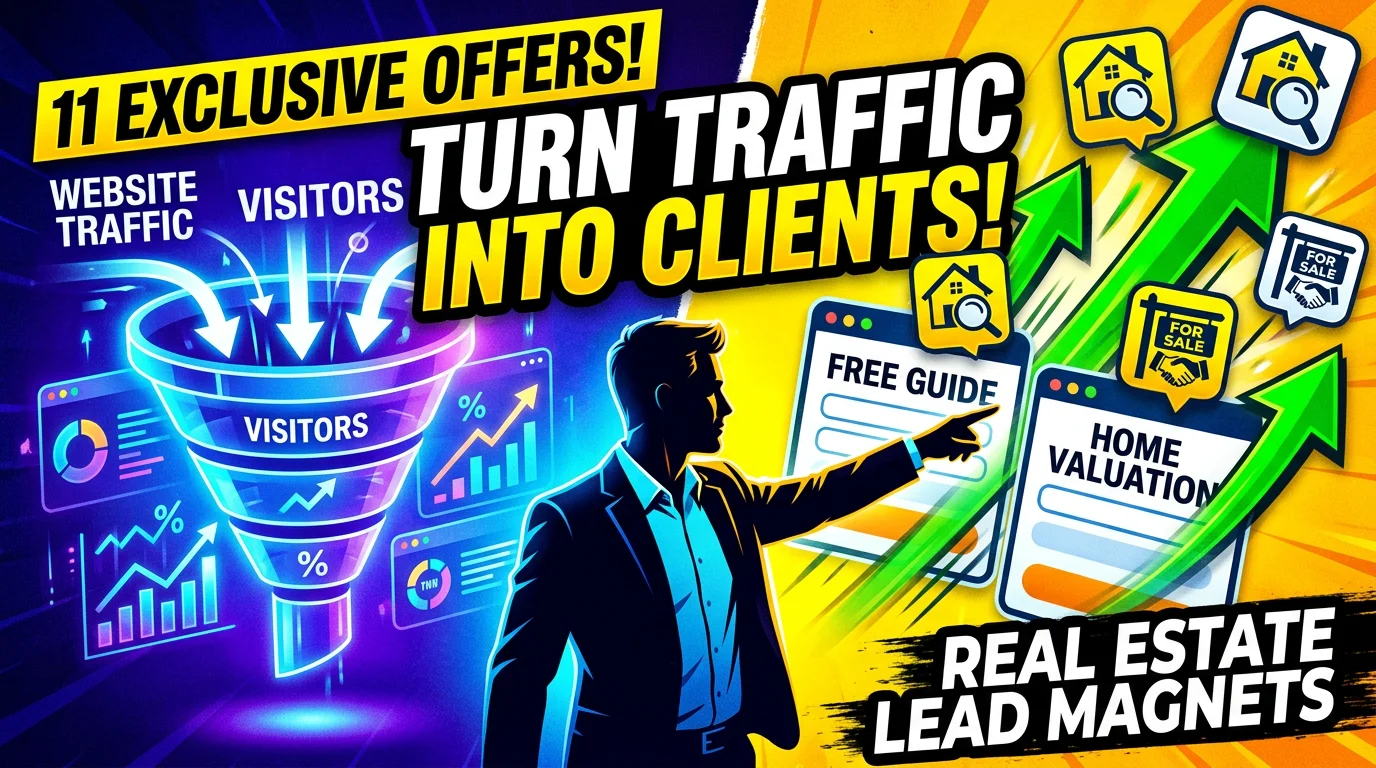
That means your website needs one or two obvious next steps for Facebook Group visitors. Good examples include:
- a relocation guide
- a neighborhood comparison page
- a seller prep checklist
- a home valuation page
- a booking page for a short consultation
If your website is vague, group engagement leaks away. If your site is clear, Facebook Groups become a steady source of warmer traffic that converts better than many paid lead sources. This is also where many agents learn why some leads don’t convert. The problem is often not the group. It is the weak handoff after the click.
This is also where your content library matters. Articles like How to Generate Real Estate Buyer Leads, Hyperlocal SEO for Real Estate Agents, Google Reviews and Real Estate Leads, and Real Estate Landing Pages That Convert can support the trust you build inside group conversations.
5. Use AI carefully, but keep the voice human
AI can help you summarize market data, brainstorm post ideas, organize common objections, and draft follow-up frameworks. It can also help you respond faster when you see recurring questions across multiple groups. A small team can use AI to act more like a focused marketing company without losing the local voice that makes community content work.
But there is a big warning here. Do not paste robotic answers into community threads. People can feel it immediately.
The winning move is using AI behind the scenes, then adding real local nuance before you post. The closer your answer sounds to something you would say on a listing appointment or buyer consult, the better it will perform.
That matches the bigger trend across real estate marketing right now. AI is making production easier, but trust still comes from specificity, judgment, and local experience.
Best Facebook Group content ideas for real estate agents
If you want to stay visible without being salesy, focus on posts and comments that help people make decisions.
Strong content angles include:
- neighborhood comparison posts
- “what $X buys in this area” breakdowns
- school zone and commute tradeoffs
- common seller mistakes before listing
- myth-busting around closing costs or days on market
- local development updates that affect housing demand
- seasonal homeowner checklists tied to your market
- contractor and vendor recommendation threads where you can add useful context
- open houses, especially when locals ask whether they still work in a given neighborhood
- partnership content with a lender, stager, or other local partner who adds useful expertise
- quick FB market updates that translate confusing headlines into plain English
These topics work because they mirror real consumer questions. They also give you material you can repurpose into email, blog, short-form video, and follow-up resources.
How to measure whether Facebook Groups are worth it
Do not evaluate Facebook Groups only by likes or comment counts. Those are weak signals.
Better metrics include:
- profile visits after group activity
- direct messages from group members
- consultation bookings that mention Facebook
- referral traffic to your site from Facebook
- seller valuation requests from local community pages
- repeat engagement from the same neighborhoods or groups
If you want better attribution, create one dedicated landing page or consultation URL for your Facebook Group efforts. That makes it much easier to see whether this channel is creating real business.
It is also worth comparing quality, not just quantity. A handful of group-generated leads can outperform a much larger batch of cold portal leads because the trust transfer is already happening before contact.
A practical weekly workflow for Facebook Group lead generation
If you want consistency without losing half your week, keep it simple.
A good weekly rhythm looks like this:
- monitor your key groups for 10 to 15 minutes each morning
- leave two to four thoughtful comments per week
- publish one original helpful post every week or two
- save recurring questions as future blog or video topics
- follow up quickly when someone messages you
This is one of the most efficient ways to build a community marketing engine around real estate lead generation. It supports buyer leads, seller leads, referrals, and your broader brand at the same time.
Ready to Turn Community Attention Into Closings?
Book a free consultation and we’ll map out a practical lead generation plan for your market, content, funnels, and follow-up.
Facebook Groups will not replace every other lead source, and they should not. But for agents who want lower-cost visibility, stronger trust, and more organic conversations, they are still one of the best overlooked channels in real estate.
The agents who win here are not the loudest. They are the most useful. They show up consistently, answer like locals, and make the next step easy when someone is ready.
That is what real estate lead generation looks like when community comes before the pitch, and it is exactly why Facebook Groups still deserve a place in your marketing mix.