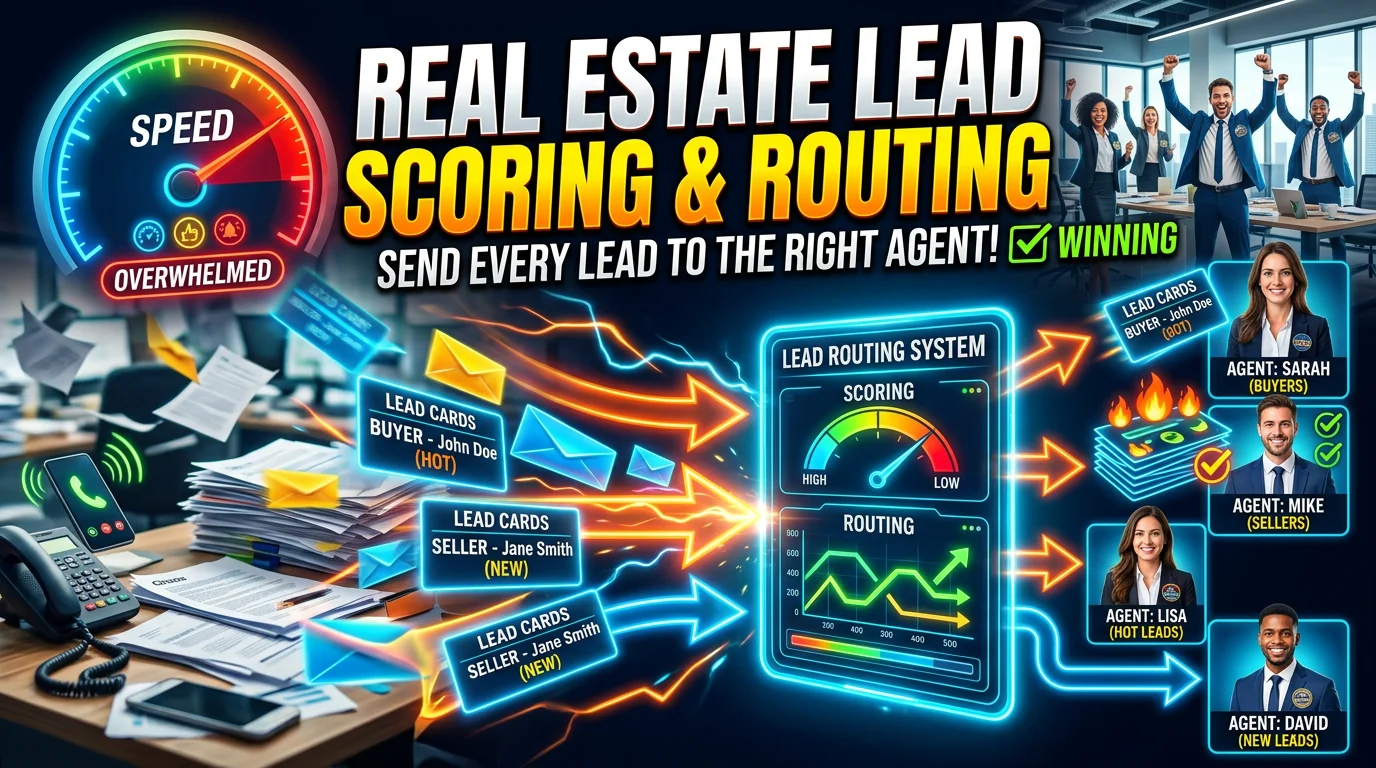
Real Estate Lead Scoring and Routing: How to Send Every Lead to the Right Agent
Real estate lead scoring and routing helps agents identify high-intent leads, respond faster, and assign each prospect to the right follow-up path.
Richard Kastl
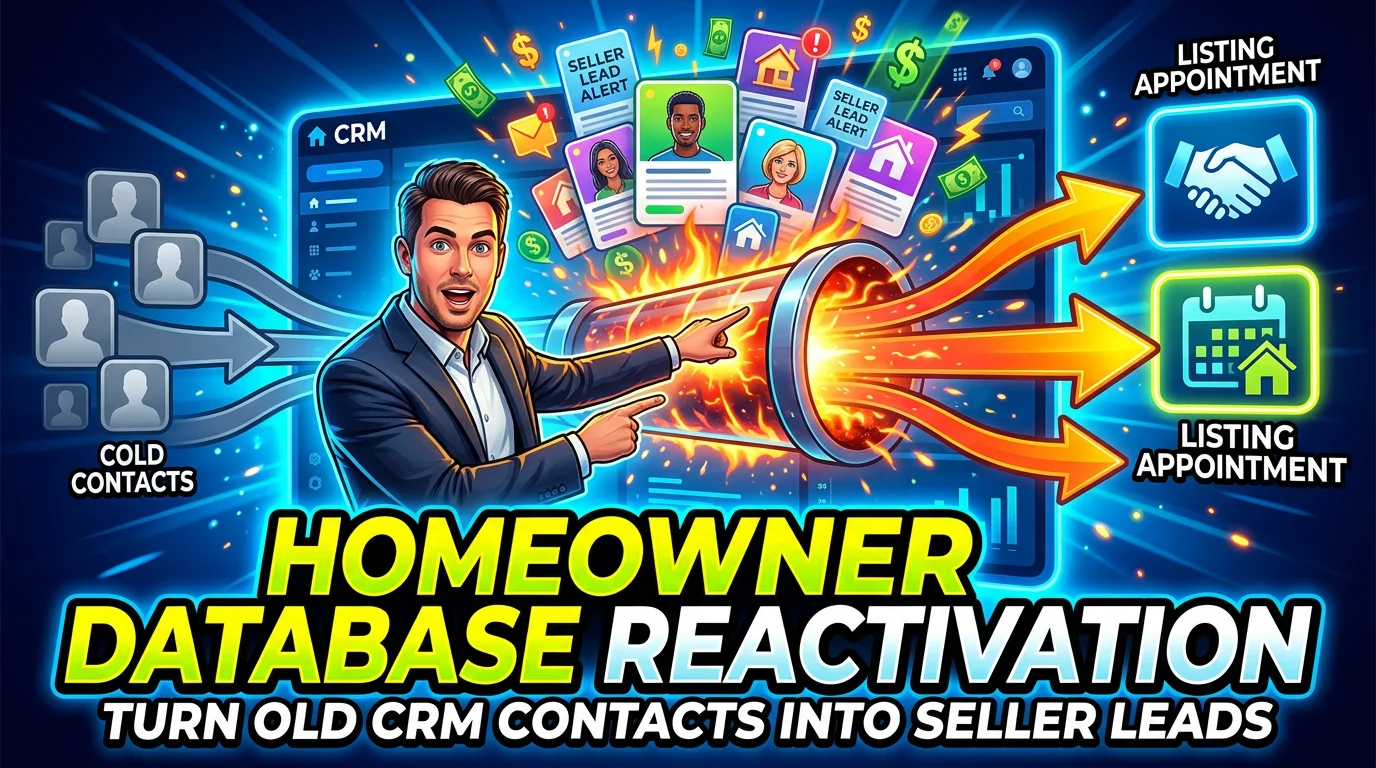
Most real estate agents are sitting on a seller lead source they already paid for: the existing database inside their CRM.
It includes past client records, old leads, dead leads, valuation requests, open house visitors, portal inquiries, sphere homeowners, and people who inquired about your services months or years ago. Many of those database contacts are not bad prospects. They are dormant contacts who once showed interest, then disappeared because the timing was wrong.
Homeowner database reactivation turns that lead database into a repeatable seller pipeline. Instead of constantly chasing new leads, you reactivate old contacts with useful property context, market conditions, personalized messages, and fast human follow-up when someone re-engages.
That matters in 2026 because paid real estate leads are crowded, portal costs keep rising, and homeowners are cautious. They want clarity on equity, timing, mortgage rates, repairs, and whether selling now makes sense. If you can reconnect with people who already know your name, you are often starting from more trust than the agent buying fresh leads from a shared list.
We help real estate agents build lead generation systems that turn old contacts, homeowner lists, and high-intent search traffic into booked consultations.
NAR’s 2025 REALTOR® Technology Survey found that social media was the top lead-generating technology for REALTORS® at 39%, followed by Customer Relationship Management at 23%. The same report said 66% of REALTORS® adopt technology to save time and 64% adopt it to improve the client experience.
That explains why database reactivation for real estate is becoming a serious strategy. Agents do not just need another app. They need a reactivation system that turns past interactions into new revenue without sounding like a canned sales pitch.
The software market is moving this way too. Lofty announced an AI-powered Homeowner Agent in April 2026, describing it as a way to identify seller intent and automatically nurture homeowners already sitting inside an agent’s database. Inman framed the trend as AI tools that turn CRM contacts into seller leads.
The bigger lesson is not that every agent needs a shiny ai sales product. It is that old leads into new conversations may be one of the most untapped revenue plays in the business.
Do not send one blast to everyone. Segment your leads first.
Start with past clients who bought three to seven years ago. A past client may have equity, family changes, rate questions, or a referral opportunity. They are far more likely to respond when the message references their home, neighborhood, or purchase timeline.
Next, pull old seller and valuation leads. These people already raised their hand around value. Some were browsing. Some were early. Some were comparing agents. A reactivation email tied to a fresh value range, net proceeds estimate, or local sales shift can wake them up.
Then review dormant leads from internet campaigns. These are the dead leads most agents ignore. Be honest with the tone: “You asked about local real estate a while back, so I wanted to send a useful update.” That feels better than pretending you have a close relationship.
Finally, include sphere homeowners and referral contacts. They may not be ready to move, but they can forward useful information to someone who is. For more on relationship-based pipeline, see our guide to sphere of influence marketing.
The fastest way to kill reactivation efforts is a generic newsletter.
A homeowner does not need another “market update” with no point of view. They need a message that helps them make a decision. Use address, neighborhood, purchase date, property type, estimated value range, or past interactions whenever you can.
Weak message: “The market is changing. Let me know if you want to sell.”
Better message: “A few homes near Oak Ridge have gone under contract faster than expected this month. If you are curious how that affects your 2018 purchase, I can send over a quick equity range.”
That second message gives the person a reason to reply. It also avoids the hard sales pitch. You are not demanding an appointment. You are giving useful interpretation.
Good reactivation topics include equity checks, seller net sheets, selling before buying, downsizing, renovation versus selling, local inventory, buyer pushback, neighborhood pricing, and what it would take to move without feeling trapped by a low mortgage rate.
You do not need a 37-step automation. A tight sequence across email, sms, and personal outreach is enough.
Open with one specific market condition. Mention inventory, days on market, buyer demand, or a neighborhood sale. The goal is to re-engage, not close immediately.
Example: “A few homeowners in [neighborhood] asked whether selling before buying is still realistic this spring. I put together a short note on what I am seeing locally. Want me to send it over?“
Send a home value range, net proceeds estimate, seller checklist, or equity review. This helps reactivate people who are curious but not ready to say, “I want to list.”
If you already use home valuation funnels, connect that content to the campaign so reactivated leads have a clear next action.
Track opens, clicks, replies, page visits, and requests. Response rate, conversion rate, appointments booked, engagement rates, unsubscribes, and revenue generated are the metric set that matters. Tracking the right metrics helps you avoid chasing every tiny signal.
Warm leads include people who click seller links, ask about timing, visit a valuation page, or reply with an objection like “We would sell, but we do not know where we would go.” Those are not casual clicks. Those are buying and selling decisions forming in public.
Automation can draft and route, but the agent still has to step in. Call, text, or send a short video when a homeowner takes a high-intent action. The point is to convert digital behavior into a human conversation.
If your CRM is full of quiet homeowners, we can help you build the landing pages, search campaigns, and follow-up paths that turn attention into real listing conversations.
AI can help real estate professionals clean lists, identify likely homeowners, summarize past interactions, draft personalized messages, and score reactivated leads. That is useful. It can also make agents lazy if they let the tool send bland copy to everyone.
The best use of real estate leads with ai is not replacing the relationship. It is helping you craft personalized messages faster, segmenting your database more intelligently, and noticing seller intent sooner. Used well, revenue with ai comes from better timing, not louder automation.
You can even connect the campaign to home services questions. A homeowner who clicks content about roof replacement, staging, landscaping, or repairs may be weighing whether to renovate or sell. That is a softer signal than a listing request, but it can still open a useful conversation.
The cost is also attractive. Reactivation is usually lower than acquiring new leads because you have already invested in the contact. You are not paying again to introduce yourself. You are paying attention to people already inside your world.
A strong reactivation campaign should not live alone. Pair it with content and landing pages that answer the same homeowner questions.
If someone clicks an equity email, send them to a seller-focused page. If they search your name after a text, they should find reviews, useful local content, and a clear consultation offer. If they are comparing options, a Google Ads seller lead funnel or predictive analytics seller lead strategy can support the same journey.
This is where database reactivation becomes a system. New lead generation brings people in. Nurture keeps them warm. Systematic reactivation brings past leads back when timing changes. Converted leads come from matching the message to the moment.
Start by segmenting old contacts by relationship, source, property status, and intent. Then send a short, useful message tied to local market conditions or the homeowner’s likely question. Follow up personally when they reply, click a seller resource, or ask for a value update.
Yes, if you approach them correctly. Old leads are not all dead leads. Many were simply too early. A respectful reactivation campaign can turn quiet database contacts into real estate leads, referrals, appointments, and revenue from leads you already paid to acquire.
Measure response rate, conversion rate, booked appointments, seller consultations, unsubscribes, and revenue generated. Do not obsess over opens alone. Engagement rates are useful, but replies and appointments tell you whether the campaign is creating new revenue.
Use all three carefully. Email is best for market context. SMS is best for short, personal nudges. Calls are best once someone shows intent. The channel matters less than relevance, timing, and whether the message feels personal.
Homeowner database reactivation is not a magic trick. It is disciplined follow-up applied to existing contacts who already have some connection to you.
That is why it works. The trust gap is smaller. The cost is lower. The message can be more relevant. And the agent who pays attention to dormant homeowners usually finds opportunities competitors never see.
If your CRM is full of quiet names, do not write them off. Clean the list. Segment it. Provide value. Watch the signals. Then follow up like a professional.
There are probably seller leads hiding in there already.
We help agents generate, nurture, and convert higher-quality real estate leads with practical systems built around search intent, seller demand, and faster follow-up.

Discover the 5 critical lead generation mistakes that keep agents stuck—and the proven system to become #1 in your market without expensive ads or endless cold calls.
✓ No credit card required • ✓ Instant access

Richard Kastl has been working with real estate professionals to help them generate high-quality leads. He is an entrepreneur with expertise as a web developer, digital marketer, copywriter, conversion optimizer, AI enthusiast, and overall talent stacker. He combines his technical skills with real estate industry knowledge to provide valuable insights and help companies connect with potential clients ready to buy or sell a home.
Real estate lead scoring and routing helps agents identify high-intent leads, respond faster, and assign each prospect to the right follow-up path.

Compare the best listing presentation software for real estate agents, including Cloud CMA, MoxiPresent, Highnote, Canva, RPR, Luxury Presence, and more. See pricing, best-fit use cases, pros, cons, and which tools actually help win seller appointments.

Copy-and-paste open house follow-up scripts for texts, calls, emails, seller reports, nosy neighbors, unrepresented buyers, and long-term nurture so agents can convert more sign-ins into appointments.
Wait — Don't Leave Empty-Handed
See how agents are getting exclusive leads at lower cost than Zillow — delivered straight to their phone. No shared leads. No bidding wars.
4×
More leads
25%
Lower cost
100%
Exclusive
Free 15-minute consultation. No contracts. No pressure.