Most real estate agents do not need another spreadsheet of cold names. They need better context on the leads they already paid to capture.
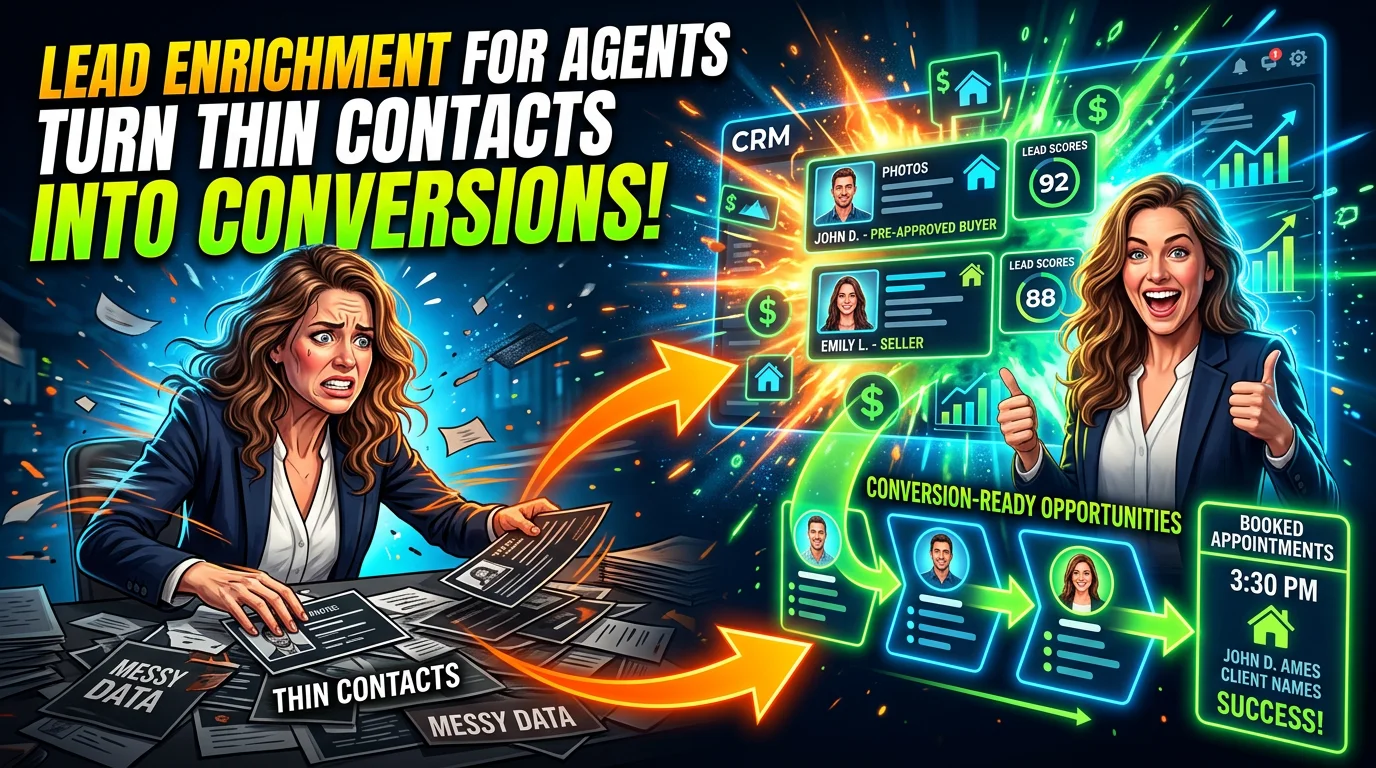
That is the promise of real estate lead enrichment. Instead of treating every form fill, home valuation request, open house sign-in, portal inquiry, and old CRM contact as a mystery, enrichment adds the missing details that help you decide who to call, what to say, and when to follow up.
A thin lead says, “Sarah, Gmail address, interested in homes.” An enriched lead says Sarah owns in your farm, clicked your seller guide twice, viewed move-up homes, came from Google search, and gave permission to text. That is a different follow-up conversation.
In 2026, Jotform and Lindy both point to the same shift: agents are using AI to capture, qualify, prioritize, and route leads because volume often grows faster than manual follow-up can handle.
Lead enrichment is the layer that makes those systems smarter. It gives your CRM enough data to score, segment, route, and personalize without forcing agents to research every contact manually.
What lead enrichment means in real estate
Lead enrichment is the process of adding useful data to a buyer, seller, investor, renter, or past-client record so your team can understand the opportunity faster.
In real estate, that data can include property ownership, mailing address, phone validation, email validation, likely move timeline, home equity signals, listing views, valuation activity, neighborhood interest, price range, source, UTM campaign, engagement history, and notes from calls, texts, emails, and appointments.
The goal is not to build a creepy dossier. The goal is to reduce guesswork. If someone requests a valuation, you should know which property they likely own. If a buyer keeps viewing homes in one school district, know that pattern before you call.
Good enrichment turns raw contact data into a useful lead profile. Bad enrichment clutters the CRM with fields no one trusts.
Why lead enrichment is trending now
Real estate teams are getting squeezed from both sides. Paid lead costs are high, organic competition is tougher, and consumers expect faster, more relevant responses. At the same time, most agents already have thousands of contacts sitting in a CRM with incomplete data.
That is why enrichment is becoming a practical lead generation strategy, not just a data hygiene project. Inman reported in April 2026 that Lofty launched an AI tool designed to turn existing CRM contacts into seller leads by enriching records with homeowner data. Whether an agent uses Lofty or another platform, the trend is obvious: the database is becoming a lead source again.
The broader AI lead generation market is moving the same way. Luxury Presence emphasizes predictive analytics, behavioral email, chatbots, and AI-driven ad engines. HomeStack calls out CRM automation, lead scoring, saved-search alerts, app analytics, and segmented database marketing.
All of those tactics depend on clean, useful data. If your CRM cannot tell a seller lead from a buyer lead, a hot prospect from a casual browser, or a past client from a bad import, automation just creates faster noise.
Want Your CRM to Produce More Appointments?
We help real estate agents clean, enrich, score, and reactivate the leads already sitting in their database.
The data worth enriching first
You do not need to enrich every field possible. Start with the data that changes follow-up.
Contact quality comes first. Validate phone numbers, emails, mailing addresses, consent status, preferred channel, duplicate records, source, and date captured. A lead with a bad number should not trigger the same urgent workflow as a lead who just replied by text.
Property context matters most for seller opportunities. Match homeowners to property address, ownership length, property type, estimated value range, mortgage or equity signals where available, absentee status, tax mailing address, and neighborhood. A homeowner who has owned for 11 years in your listing farm should receive different messaging than a renter browsing condos.
Behavioral intent shows what the person is doing now. Track valuation requests, saved searches, repeat listing views, pricing guide downloads, open house registrations, email clicks, SMS replies, call outcomes, page visits, and form submissions. Behavioral enrichment often predicts timing better than demographic assumptions.
Source and campaign data protects your budget. Capture UTM source, medium, campaign, keyword, ad group, landing page, referral page, and original lead source. Without this, you cannot know whether Google Ads, Facebook lead forms, YouTube, SEO, referrals, open houses, or portals are producing qualified leads.
Lifecycle stage keeps the database organized. Label new leads, active buyers, active sellers, long-term nurture, past clients, referral partners, renters, investors, dead leads, unsubscribed contacts, and do-not-call records. This prevents awkward outreach and helps your automation stay relevant.
How enrichment improves lead scoring and routing
Lead enrichment becomes powerful when it feeds your AI lead scoring system and routing rules.
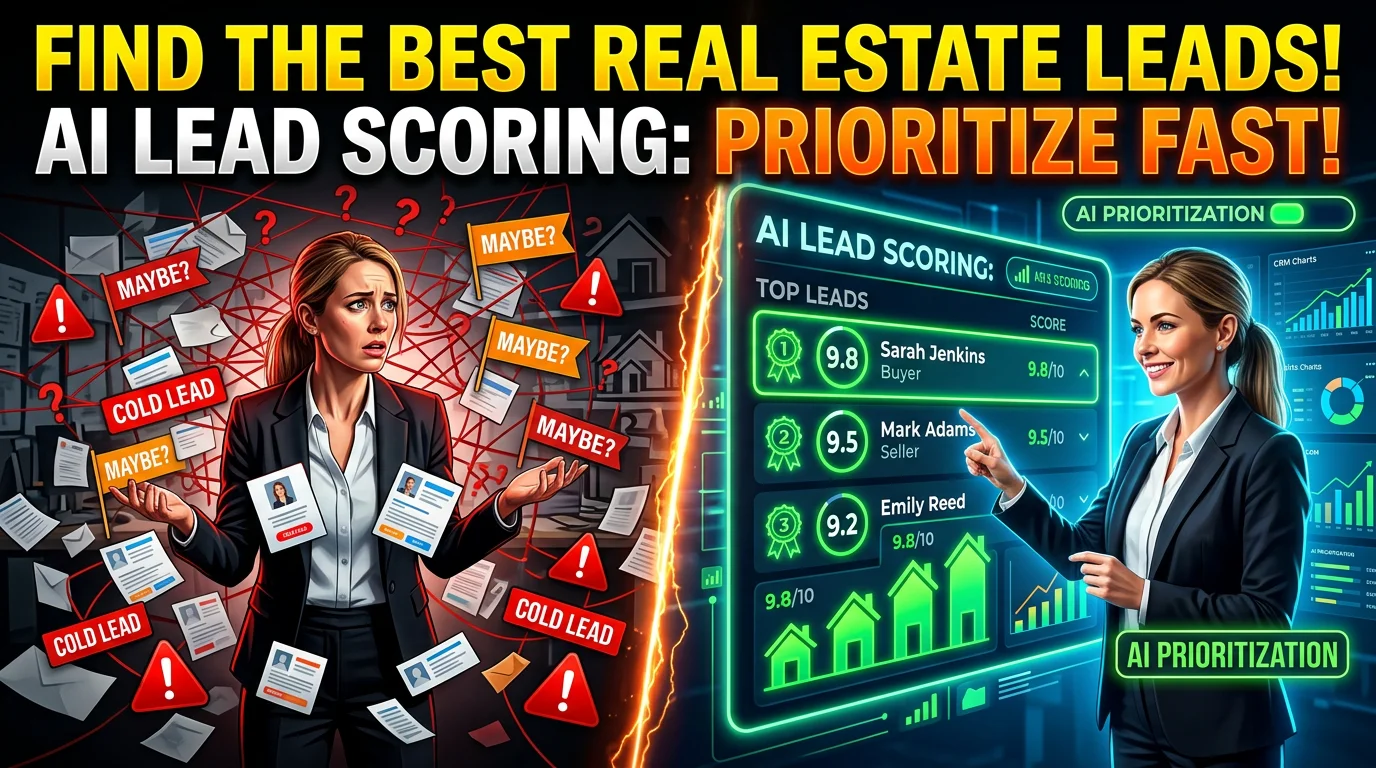
A basic lead score might give points for an email click. An enriched score can combine source, behavior, property fit, communication quality, and timing. That means a seller valuation lead in your target ZIP code with high equity, recent pricing-page activity, and a valid mobile number can rise above a low-fit buyer lead who opened one newsletter.
Routing improves too. A relocation buyer can go to the agent who works that price range. A probate or inherited-property inquiry can go to the agent trained on sensitive seller conversations. A Spanish-speaking lead can go to the right team member. A high-value listing prospect can trigger a same-day consultation workflow instead of a generic drip.
This is where enrichment and real estate lead routing work together. The CRM should not just store more data. It should use the data to decide what happens next.
The best setup gives agents a short reason code, not just a number. For example:
- “High seller intent: valuation request, 2 pricing page visits, owns target-area property”
- “Hot buyer: viewed 8 homes in 48 hours, saved search, replied to SMS”
- “Reactivation opportunity: past buyer, opened market update 4 times this month”
Those notes make follow-up feel personal because the agent can lead with context.
Think of enrichment as the fuel for real estate lead scoring. Lead scoring is the process of assigning a numerical value to every lead based on their actions, fit, source, and timing. In lead scoring in real estate, the process of ranking prospects is only useful when the CRM has enough context to score leads fairly. A lead score should reflect property views, behavioral signals, high engagement, market conditions, and the lead’s current level of urgency, not one random email open.
A modern CRM can use lead scores to identify and prioritize high-intent leads, hot leads, promising leads, and prospects most likely to become customers. The overall score should help real estate agents prioritize leads, focus on the leads who are actively showing a likelihood to buy or sell, and avoid spending time on leads that are unqualified leads. That is how AI lead scoring and enrichment help agents focus their time and resources where conversion rates improve. This context is essential for real estate follow-up.
For example, an AI-powered lead scoring model can assign values to leads using real estate CRM data, MLS behavior, saved searches, call notes, and website activity. The scoring criteria might give a higher score to seller leads with equity, repeat valuation visits, and a valid phone number. The scoring system might give a lower lead score to a prospect outside your service area. Those scoring rules and scoring strategies make the lead score easier to trust, especially when high scores come from a system that assigns points real estate professionals can explain.
Effective scoring real estate leads is not about replacing judgment. It is about allowing agents to focus, streamline lead management, automate routine follow-up, and move the conversation with leads who are most likely to convert. When agents can prioritize high-intent leads in real-time, they can close deals, close more deals, and close deals faster because the pipeline is clearer and the lead score points agents to focus their time on leads are most likely to respond.
If you want to explore how lead scoring comes together for lead qualification, the core idea is simple: lead scoring helps agents identify promising prospects, optimize your lead generation workflow, and improve sales efficiency across the real estate industry. Tools like an AI model, IDX activity tracking, phone validation, and nurture automation help agents can prioritize the right real estate leads using lead based signals instead of gut feel alone. In plain English, scoring real estate contacts gives agents can focus on the best opportunities before a competitor gets there.
A simple lead enrichment workflow for agents
Start small. A useful enrichment system can be built in stages.
First, audit every source: IDX forms, valuation pages, Google Ads, Facebook lead ads, portals, open houses, referrals, sign calls, newsletters, landing pages, chatbots, and imports. Check whether each source passes clean data into the CRM.
Second, standardize the core fields: source, capture date, lead type, consent status, phone, email, service area, lifecycle stage, assigned agent, last activity date, seller property address, buyer location, price range, timeframe, and financing status.
Third, connect enrichment tools carefully. This might mean built-in property data, a data append provider, phone validation, email verification, IDX behavior tracking, or automation that tags page visits and form answers. Avoid tools until you know which fields you need.
Fourth, build rules that create action. A farm-area valuation request creates a hot seller task. Repeat listing views trigger a showing prompt. A downsizing click moves a past client into seller nurture. Missing consent suppresses SMS.
Fifth, review results monthly. Keep the enriched fields that predict appointments and remove the clutter.
Build a Cleaner Lead Generation System
If your CRM is full of half-finished records, we can help you turn that data into prioritized follow-up, seller opportunities, and booked appointments.
Compliance and trust still matter
Lead enrichment can go wrong if agents treat data like a free-for-all. Real estate is a relationship business, and consumers are already cautious about how their information is used.
Keep consent visible. Know who gave permission for calls, texts, and email. Respect opt-outs. Maintain do-not-call hygiene. Use fair housing review for targeting and messaging. Do not let AI infer or act on protected characteristics. Keep notes factual and professional.
Jotform’s implementation guidance for AI lead generation in real estate makes this point clearly: before launching automation, teams should define data readiness, consent, dedupe rules, UTM tracking, TCPA considerations, opt-out automation, audit logs, and human escalation. That advice applies directly to enrichment.
The standard is simple: use data to be helpful, not invasive. “I saw you looked at 123 Oak Street at 11:43 p.m.” feels creepy. “Are you trying to stay in that school zone?” feels useful.
Mistakes that make enrichment fail
The first mistake is enriching bad data before cleaning it. If your CRM is full of duplicates, fake emails, old imports, and mixed lead sources, adding more fields makes the mess harder to trust. Clean first, enrich second.
The second mistake is buying data you never use. If an agent cannot use a field in a call, text, email, route, score, or segment, it probably does not belong in the daily workflow.
The third mistake is letting automation replace judgment. Enrichment should help agents prepare, not send sensitive or inaccurate messages without review. Human-in-the-loop workflows still matter for sellers, distressed situations, inherited properties, divorce, foreclosure, and relocation.
The fourth mistake is failing to close the loop. Every appointment, agreement signed, listing taken, showing booked, and deal closed should feed back into your scoring model so the system learns which enriched signals predict revenue.
The payoff: more value from the leads you already have
Lead enrichment is not as flashy as a new ad campaign, but it can be more profitable. A cleaner CRM helps agents respond faster, personalize follow-up, reactivate old contacts, improve lead scoring, route opportunities correctly, and stop wasting time on low-quality records.
If you already have traffic, ads, forms, referrals, open houses, and a database, enrichment may be the missing layer between “we have leads” and “we know who to call today.”
The agents who win in 2026 will capture context, enrich the right data, and turn it into conversations.
Ready to Turn Messy Lead Data Into Appointments?
Book a free consultation and we’ll look at how your current lead sources, CRM, enrichment, scoring, and follow-up can work together.